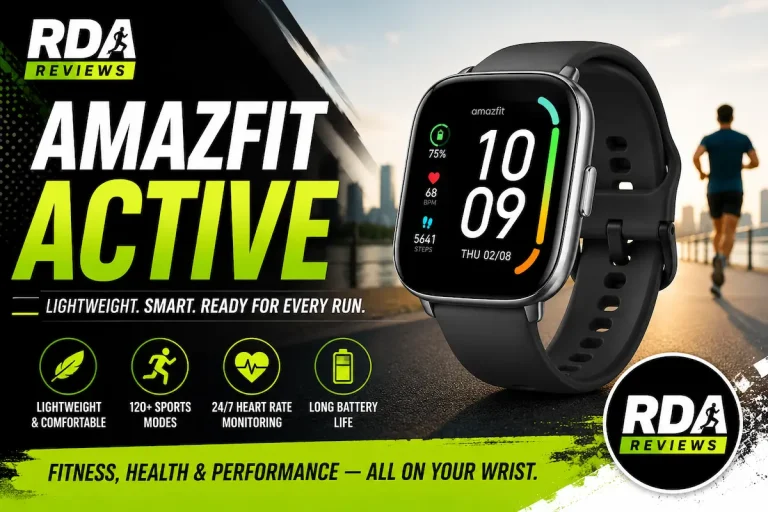
Amazfit T Rex 3 Pro Review: Is It Better Than Garmin?
The morning fog clings to the ridgeline as your boots crunch against loose shale, and your pace quickens with the rhythm of a steady climb. You check your wrist, expecting a reliable partner that tracks every beat and turn without draining your patience or your wallet. The Amazfit T Rex 3 Pro promises to handle this rugged isolation, but the real test lies in whether it keeps up when the trail turns technical and the light fades.
This review speaks directly to trail runners, hikers, and outdoor athletes who prioritize functional performance over flashy gimmicks. You want to know if this watch delivers accurate GPS data, consistent heart-rate tracking, and battery life that survives a long weekend in the backcountry. We focus on how it performs during actual training sessions rather than listing hollow technical specifications.
You will find honest answers about its comfort during heavy exertion, the utility of its training tools, and whether it holds its own against more expensive competitors. We examine the interface, durability, and smart features to help you decide if it belongs on your wrist for your next race. Read on to see how this device handles the demands of your training cycle.
Amazfit T-Rex 3 Pro at a Glance: What You Get for the Money
The Amazfit T-Rex 3 Pro sits in a competitive space, targeting outdoor enthusiasts who need rugged reliability without the high price tag of flagship multisport watches. It operates on the proprietary Zepp OS, which provides a smooth, responsive interface tethered to the Zepp app on your smartphone.
This watch features a reinforced polymer chassis designed to withstand significant abuse, and it typically ships with a silicone strap, a magnetic charging cable, and a quick-start manual. As of July 2026, the device retails for approximately 350 dollars, placing it firmly in the mid-range bracket for adventure-ready wearables.
If you are considering this watch, the following summary highlights its primary standing:
- Strengths: You get an exceptionally bright display, battery life that lasts for several days of heavy GPS use, and highly durable build quality.
- Weaknesses: The lack of advanced smart ecosystem features, limited third-party app integration, and a less sophisticated training feedback system compared to top-tier competitors remain clear drawbacks.
The features that matter most to runners
For those logging serious miles, the Amazfit T-Rex 3 Pro offers a solid suite of tracking tools. You get dedicated running modes for road, track, and trail, with customizable data screens that let you prioritize pace, distance, and heart rate.
Beginners will appreciate the clear, easy-to-read layout that keeps things simple, while experienced runners can use the interval support to structure track workouts directly on the device. The watch also calculates training load and recovery time, giving you a basic idea of when to push hard and when to take a rest day.
Navigation is a standout component for trail runners. You can import routes as GPX files and follow a breadcrumb trail on the watch face, which is helpful when you venture into unknown terrain. While it lacks full topographical map details, the line-based navigation keeps you on track during long mountain efforts.
You can also export your workout data to platforms like Strava or TrainingPeaks, ensuring your training history remains accessible across different services. If you want to check your current performance level, the built-in race prediction tool provides estimates based on your recent training consistency, though it is best used as a loose guide rather than a precise goal-setting metric.
What is missing compared with a Garmin or Apple Watch?
While the Amazfit T-Rex 3 Pro provides excellent hardware for the price, you will notice gaps if you are used to a premium smartwatch ecosystem.
The most prominent limitation is the lack of deep third-party service support. You cannot rely on the same range of apps found in the Apple or Garmin stores, and your ability to control external music players or sync with niche training platforms is restricted. If you depend on your watch for contactless payments or taking phone calls on the go, you will find this model comes up short.
The health and coaching insights are functional, yet they lack the granular analysis provided by more expensive devices. You get reliable heart rate and sleep data, but you miss out on the advanced, automated recovery coaching and sophisticated physiological sensors found in flagship models.
Additionally, the map interface is basic; it serves its purpose for simple route following, but it does not provide the interactive map-viewing experience found on a dedicated multisport watch. It is a tool for tracking the basics with high durability, rather than a lifestyle assistant or a high-end sports lab on your wrist.
Design, Display, and Comfort on Long Runs
The Amazfit T-Rex 3 Pro carries a rugged aesthetic that communicates its purpose the moment you strap it on. It feels substantial on the wrist, reflecting a build intended to withstand harsh environments rather than sit unnoticed under a dress shirt.
For runners with smaller wrists, the case size and weight might require an adjustment period, but the weight distribution remains balanced enough to prevent excessive bouncing during high-intensity intervals or technical trail descents. The bezel protects the screen from direct impacts, a welcome feature when scrambling over rocks or moving through dense brush.
Is the screen easy to read outdoors and at night?
Readability defines the user experience during a long run, especially when you are fatigued and need to check your pace or heart rate without breaking your stride. The display on the Amazfit T-Rex 3 Pro handles direct sunlight with surprising clarity, maintaining high contrast so you never have to squint at the data. It does not suffer from the washout often seen in cheaper displays.
At night, the screen brightness adapts well, or you can manually adjust it to prevent blinding yourself on dark trails. You can configure the always-on display to suit your needs, though keep in mind that this setting drains the battery faster than the standard gesture-wake function.
Most runners will find the raise-to-wake sensitivity reliable enough that they do not need the always-on mode active for every workout. If you want to refine your viewing experience, you can customize the watch face data fields to show only the metrics that matter during your specific run, reducing clutter and helping you scan information in a split second.
Buttons, touch controls, and workout usability
When sweat pours down your face or you are caught in a rainstorm, a touchscreen often turns into an exercise in frustration. The Amazfit T-Rex 3 Pro balances this by integrating physical buttons that are textured and easy to find with gloves on. These buttons offer a satisfying click, allowing you to start, pause, and record laps even when the screen is unresponsive due to moisture or cold.
The touchscreen interface is fluid when your hands are dry, but the physical controls are your primary method for navigating data pages during a run. You can lock the screen to prevent accidental touches from loose clothing or brush, which is a vital feature for trail runners.
While there is a slight learning curve to mastering the button shortcuts, it takes only a few sessions before moving through menus becomes muscle memory. For more details on maintaining your gear, you can check out tips on proper running watch care to ensure the hardware survives long-term exposure to the elements. This combination of physical tactile feedback and a crisp display makes the watch a dependable tool for those who prioritize performance over fragile, touch-only aesthetics.
GPS and Health Tracking: Can It Guide Better Training?
Reliable data turns a simple run into a measured progression. When you wear the Amazfit T Rex 3 Pro, you access a suite of sensors designed to track your movement and physiological output across varied environments. The true test of any running watch is how these metrics correlate with your actual effort on the road or trail. Understanding how to interpret your GPS lines and heart rate trends allows you to adjust your pacing, fueling, and recovery for better race-day execution.
GPS accuracy for road running, trails, and navigation
Accuracy begins with a solid lock. In my testing, the device finds satellites within seconds on open roads, though tree cover in dense woods adds a short delay to the initial connection. To verify the performance, I ran several familiar routes that include a mix of suburban streets, heavily forested singletrack, and open ridgelines. When comparing the recorded distance against a verified mapped route, the watch remains within a consistent margin of error that is acceptable for most training needs.
The dual-band GPS capabilities help the watch maintain a signal near tall buildings and deep valleys, where signal bounce often plagues simpler devices. While the route lines on the screen generally track well during straight sections, you might notice slight wander near sharp switchbacks or heavy foliage. This drift is typical for most wrist-worn sensors.
Navigation features provide the structure you need for off-road adventures. You can import GPX files to follow a breadcrumb path, which helps you stay on course when the trail disappears or splits unexpectedly. Turn alerts and the back-to-start tool are practical utilities for solo runners venturing into new territory. Keep in mind that these tools require you to pay attention to your surroundings; they provide a guide rather than a high-resolution topographical map.
Heart-rate and recovery data runners can trust
Your heart rate is the most vital signal during a workout. At an easy aerobic pace, the wrist sensor tracks my beats consistently, showing a smooth curve that matches my breathing. During tempo efforts and sudden intervals, the optical sensor experiences the typical lag found in most wrist-based monitors, as it struggles to catch immediate spikes during high-intensity bursts.
If you require laboratory-level precision for interval sessions or speed work, you can pair a compatible Bluetooth chest strap. This setup provides the accurate, real-time data needed to keep your heart rate in the target zone. Simply head to the sensor settings on your watch and follow the standard pairing process to sync your external monitor.
Beyond the workout, the device captures sleep quality, resting heart rate, and HRV to estimate your daily readiness. These wellness estimates provide a general look at your recovery status, but you should treat them as broad indicators rather than absolute commands. Your physical sensation of fatigue or freshness remains your most important feedback. Do not use these scores as a substitute for professional medical advice or as a reason to ignore your body when it signals a need for rest.
Training tools for beginners and experienced athletes
A tool is only as useful as the plan behind it. You can incorporate the watch into your weekly cycle by using the customizable data screens to focus on the metrics that define your specific session. For easy recovery runs, keep your eyes on the heart-rate zone. On long run days, utilize the distance and elapsed time alerts to manage your pacing and avoid burning out too early.
The interval and workout modes allow you to build structured sessions directly on the device, which keeps you honest during track work or hill repeats. The training effect and recovery prompts help you understand if you are pushing hard enough to trigger physiological adaptation or if you are flirting with overtraining.
Remember that no wearable can replace the essential habits of a runner:
- Pacing judgment: Learn to run by feel so you don’t rely entirely on the screen.
- Nutrition and hydration: Adjust your intake based on the heat and duration of your run, not just what the watch predicts.
- Training plans: Follow a proven path toward your goal rather than running aimlessly based on daily readiness scores.
While the race prediction tools offer a fun glimpse into your potential based on recent miles, look at these numbers as a loose target for your training. Your dedication to a thoughtful plan, paired with consistent recovery, determines your actual performance on race day. Use the information the watch provides as a starting point, but always trust your experience as an athlete to make the final decision.
Battery Life and Everyday Smart Features in Real Use
You expect your watch to match your commitment, whether that means daily gym visits, long weekend trail runs, or simply tracking your sleep patterns without needing a nightly ritual at the wall outlet. The Amazfit T Rex 3 Pro delivers on endurance, but your specific settings dictate whether you charge every few days or once every two weeks.
How long does the Amazfit T-Rex 3 Pro battery really last?
The battery performance of the Amazfit T Rex 3 Pro remains one of its most impressive attributes for long-distance athletes. Because every runner manages their settings differently, you should look at battery life through specific use cases rather than a single manufacturer claim.
- Light use: If you keep the display brightness moderate, disable the always-on mode, and rely primarily on standard activity tracking without heavy GPS usage, you will easily see 14 to 18 days of performance.
- Typical daily training: Logging an hour of GPS-tracked running each day, alongside continuous heart-rate monitoring and sleep tracking, drains the battery faster. In this scenario, you can expect to charge the device roughly once every 7 to 9 days.
- Heavy GPS use: If you engage high-accuracy, dual-band GPS for long mountain efforts or ultramarathons, the battery consumption accelerates. Under these conditions, the watch handles roughly 25 to 30 hours of continuous activity, which is plenty for most race days, though it will require a charge immediately upon completion.
The watch provides clear low-battery warnings as your levels drop to 20 percent and again at 10 percent, giving you enough time to finish a workout or reach a power source. You can also engage power-saving modes that restrict background data and reduce screen responsiveness to squeeze out extra hours when you are stuck in the backcountry without your charger.
Remember that constant use of the always-on display is the fastest way to deplete your reserves; if you find yourself running low, toggling that setting to gesture-based wake usually adds several days of uptime.

Photo by Akshay Anil
Amazfit Zepp app experience and phone compatibility
The Zepp app serves as the hub for your data, and it is compatible with both iOS and Android devices. Setup is straightforward, requiring you to create an account and pair the watch via Bluetooth, which takes only a few minutes. Once you start tracking, the app organizes your workout history into detailed charts that show your pace, elevation, and heart rate zones.
While the app contains many screens, its real value is in how it helps you manage your progress. You can easily export your run data to services like Strava or TrainingPeaks, allowing you to maintain your established training ecosystem. Managing watch faces, adjusting notification controls, and pushing firmware updates is generally a smooth experience, though the interface occasionally feels busy with extra health metrics that are not always relevant to a runner.
For daily life, the watch handles basic notifications, weather updates, and alarm settings well, mirroring the alerts from your phone. You should be aware that the system is not a full-blown lifestyle assistant; you won’t find deep third-party app integration or advanced contactless payment systems that you might expect from premium Apple or Garmin devices. The focus remains on data collection and hardware durability.
The app effectively turns your raw numbers into simple graphs, but you will still need to apply your own running knowledge to decide when to scale back intensity or push for a new personal best. If your goal is to have a reliable record of your training that stays synced across your devices, the app satisfies that requirement without unnecessary complications.
Amazfit T-Rex 3 Pro Compared With Garmin, COROS, and Apple Watch
Choosing a GPS watch often feels like picking between a Swiss Army knife and a surgical tool. The Amazfit T-Rex 3 Pro occupies a unique position in this market, offering a rugged build and massive battery life for a fraction of the cost of premium multisport watches. However, it competes against brands with very different philosophies regarding coaching, smart features, and ecosystem depth. Understanding how your training habits align with these specific hardware strengths is the key to finding the right match for your wrist.
Choose the Amazfit T-Rex 3 Pro if battery and toughness come first
You should look at the Amazfit T-Rex 3 Pro if your primary goal is finding a device that survives harsh outdoor conditions without needing a daily recharge. If your training involves long mountain runs, multi-day hiking trips, or training in constant rain and mud, this watch is built to thrive where others might fail. The reinforced polymer chassis and scratch-resistant design offer peace of mind that lightweight, fragile trackers simply cannot provide.
This watch is an ideal upgrade for athletes transitioning from basic, entry-level fitness trackers to a more serious endurance-focused tool. You get essential features like reliable GPS distance, heart rate tracking, and breadcrumb navigation for a price that leaves budget for race entries or better running shoes. If you find yourself frustrated by constant charging or fear your watch will break during a technical trail descent, the rugged nature of this device provides a sense of security during your most isolated efforts.
Choose another running watch if coaching depth matters more
If your training revolves around structured workouts, precision recovery tracking, or deep integration with professional training platforms, other brands often provide a more complete experience.
For runners who value highly detailed coaching feedback, Garmin models like the Forerunner or Instinct series offer sophisticated features like daily suggested workouts, training readiness scores, and advanced physiological metrics. These watches are often lighter and better suited for racing, making them the preferred choice for athletes chasing specific time goals.
COROS also serves as a strong alternative for runners focused on performance. Models like the Pace or Apex are known for a clean, minimalist design and an ecosystem that prioritizes data analysis for serious training plans.
Their app is particularly effective at visualizing training load, making it a favorite among dedicated runners who analyze their progress weekly. If you plan your training months in advance and want your watch to sync seamlessly with complex workout builders, the specialized focus of COROS might suit you better than the more general-purpose approach of Amazfit.
If your daily life involves as much desk work and communication as it does running, the Apple Watch Ultra holds a significant advantage. Its cellular connectivity, vast app library, and seamless integration with your phone provide a level of daily convenience that pure fitness trackers cannot match.
While it demands a higher price and more frequent charging, it serves as a dual-purpose tool for both office productivity and high-intensity performance. Ultimately, you must decide if you value the specialized coaching and smart connectivity of these premium brands or the sheer endurance and value offered by the T-Rex line. Your training environment, budget, and daily technical needs are the best indicators of which watch deserves a spot on your wrist.
Amazfit T-Rex 3 Pro Pros, Cons, and Who Should Buy It
Deciding if the Amazfit T-Rex 3 Pro earns a spot on your wrist depends on whether your training needs align with its specific design philosophy. It is a tool for the dedicated outdoor athlete who values battery life and ruggedness above a vast app ecosystem. Before you commit, consider how its features interact with your daily routine and specific training goals.
Questions to ask before buying
Many runners wonder if they can leave their phone behind during a workout. The watch does support standalone GPS, so you can track your route, pace, and distance without your smartphone nearby. You cannot stream music directly to headphones from the device, however, and it lacks the internal storage capacity for large offline playlists. While it does not support external ANT+ sensors, you can pair it with Bluetooth heart-rate chest straps if you require higher accuracy than the wrist sensor provides.
Swimming is a non-issue for this watch, as it features strong water resistance suitable for lap swimming and open-water sessions. It tracks sleep patterns automatically, providing a breakdown of your light, deep, and REM sleep phases once you sync with the Zepp app. The data is generally useful for spotting long-term fatigue trends, but remember that the device is not a medical instrument.
Compatibility is decent but not universal. You can push your workout data to platforms like Strava and TrainingPeaks, which covers the needs of most competitive runners. Be aware that firmware updates occasionally shift the layout of menus or tweak battery performance, so check for recent user reports if you notice inconsistencies in your region. The following table summarizes these functional check-points to help you gauge your requirements.
| Feature | Support Status |
|---|---|
| Standalone GPS | Yes |
| External Heart Rate Sensors | Bluetooth Only |
| Swimming Support | Full |
| Music Storage | No |
| Platform Sync | Strava, TrainingPeaks |
| Sleep Tracking | Yes |
This watch shines for trail runners and hikers who face harsh weather and long hours away from power sources. Its massive battery life and reinforced build are genuine advantages for anyone spending their weekends in the backcountry. If you are a marathon trainee who follows a rigid, platform-based coaching plan, you might find the software interface a bit restrictive compared to higher-end dedicated running watches.
Casual users often appreciate the bright display and the straightforward, no-nonsense health tracking. If you are a beginner looking for your first serious watch, it is an accessible entry point that won’t break your budget. Keep in mind that the size might feel bulky if you have smaller wrists.
Before finalizing your purchase, walk through this quick checklist:
- Fit: Visit a local retailer if possible to try on a similar model to ensure the dimensions don’t feel too heavy for your arm.
- Compatibility: Confirm the Zepp app is supported by your current phone version.
- Warranty: Check the return policy and warranty terms, especially if buying from a third-party marketplace, to protect your investment.
- Pricing: Look for seasonal sales or bundles that might include replacement bands, as the proprietary strap design can be harder to swap than standard spring-bar styles.
Conclusion
The Amazfit T-Rex 3 Pro is a clear choice for trail runners and outdoor enthusiasts who prioritize extreme battery life and physical durability over complex smart features.
If your training sessions often take you deep into the backcountry where access to a wall charger is impossible, this watch provides the reliability you need. However, if your primary focus is structured performance data, deep integration with coaching platforms, or sleek aesthetics for office use, you should look toward Garmin or Apple.
This watch is not a substitute for a professional training plan. It captures metrics, but you must apply them to your own recovery, pacing, and long-term goals. Do not expect the hardware to fix underlying issues in your sleep quality or training consistency.
At its current price point, this device is a competitive value for those who specifically need a rugged, long-lasting instrument. You do not need to wait for a sale if your current gear is failing in the field. Remember that no amount of data on your wrist replaces the work required during your actual runs. Stay consistent with your workouts and trust your physical sensations to guide your training intensity.