

Amazfit Active 3 Premium Heart Rate Accuracy: Is It Accurate?
Can the Amazfit Active 3 track your heart rate accurately enough for easy miles, grueling interval sessions, recovery days, and race preparation? Wrist-based optical sensors are convenient, but they don’t always match the precision of a dedicated chest strap during rapid pace changes. Because your training decisions depend on reliable data, you need to know how this device handles real-world running stress.
To give you an honest assessment, this review breaks down resting heart rate tracking, steady aerobic efforts, sudden surges, interval workouts, wrist fit, software performance, and direct comparison testing against trusted monitors. You will see exactly where the watch excels and where it falls short so you can train with confidence.
Amazfit Active 3 Premium Heart Rate Accuracy Explained
When you strap a modern sports watch to your wrist, you expect reliable data on every training run. Understanding how the Amazfit Active 3 measures your effort helps you separate real physiological trends from temporary sensor noise. Performance tracking relies on more than a single glowing green light, so looking closely at how the technology works changes how you interpret your daily runs.
What the watch is measuring at your wrist
Optical heart rate monitoring relies on photoplethysmography to track your pulse. Green LEDs on the back of the case shine light into your skin, and nearby light sensors measure how much of that light bounces back. Because blood surges through your capillaries with every heartbeat, the volume of blood changes constantly, altering the amount of reflected light.
Sophisticated internal algorithms take these raw optical signals and filter out motion artifacts caused by arm swing or foot strikes. After filtering, the software creates a readable heart rate record for your training log. However, optical sensors do not measure the electrical impulses that trigger your heartbeats. Because electrical chest straps detect actual heart signals directly, wrist-based optical devices often display slight delays during sudden pace changes.
Accuracy, precision, and useful training data are not the same
Absolute accuracy means matching a clinical ECG machine, whereas precision means the device provides repeatable measurements under similar conditions. During a hard interval session, your wrist monitor might lag behind a rapid surge by a few seconds. Still, that temporary delay rarely ruins your overall workout analysis.
Average heart rate, time spent in specific training zones, resting heart rate, and overnight recovery patterns matter much more than chasing a flawless live number during every second of a run. Consistency allows you to monitor fitness adaptations over months of training. When your resting baseline drops and your recovery scores improve, your training plan is working, regardless of minor instantaneous fluctuations on your wrist display.
How Accurate Is the Amazfit Active 3 Premium During Real Runs?
Putting any sports watch through real-world miles reveals the truth behind its marketing claims. Evaluating the Amazfit Active 3 Premium requires testing the device across different terrains, weather conditions, and paces to see how optical data holds up against physical effort. Testing observations show clear performance boundaries depending on whether you are cruising on flat pavement or grinding up steep gravel hills.
Easy runs and steady aerobic efforts
Low-motion running provides the easiest test for an optical sensor. Because your arm swing stays relaxed and your cadence remains predictable, the hardware easily locks onto your pulse. During these relaxed efforts, the watch tracks closely with a reference device. It holds a believable trend that supports effective aerobic zone control.
You can easily keep an easy run below a personal heart rate ceiling by glancing at your wrist. However, you might still check whether effort drifts late in a long run. As dehydration sets in and cardiac drift occurs, the watch registers that gradual incline reliably, proving itself dependable for base-building miles.
Intervals, sprints, and fast pace changes
Rapid changes in effort expose wrist sensor limits quickly. When you accelerate into a hard track repeat, the watch often displays a delayed response. Short intervals, recovery jogs, and explosive sprints happen faster than optical blood flow changes can register on your skin.
Smart runners use pace, perceived effort, and lap structure alongside heart rate when intervals are too short for wrist data to react. Relying solely on real-time numbers during a 200-meter repeat leads to frustration because the sensor still catches up after you finish the effort.
Hills, long runs, and sweaty race-day conditions
Climbing steep hills, heavy arm swinging, and road vibration disrupt optical readings. Sweat, freezing temperatures, and fatigue also interfere with skin contact over time. A long run reveals whether the watch maintains contact and battery-supported tracking over hours of continuous pounding.
Watch out for questionable readings during hard efforts. An implausibly high value that does not match your breathing or perceived effort usually indicates cadence lock, where the device mistakenly counts your steps instead of your heartbeats. Resetting the band snugly above your wrist bone before heading out prevents most of these tracking errors.
The Sensor, Fit, and Settings That Shape Heart Rate Results
Achieving reliable metrics involves much more than simply fastening a device to your wrist. Hardware is only part of heart rate performance, because your anatomy, preparation, and software configuration dictate how well the optical sensor interacts with your body.
Wear the watch correctly for cleaner readings
Position the watch snugly about one finger-width above your wrist bone before you step out the door. A loose fit lets outside ambient light leak under the casing, which confuses the optical sensors and ruins your data. On the other hand, an overly tight band digs into your skin and causes discomfort during long training sessions. Because every runner has a unique wrist shape, you may need to slide the band slightly higher or lower until the sensor sits firmly against stable tissue without cutting off your circulation.
Prepare your body and the sensor before a workout
Warming up for several minutes gets your blood flowing and primes your skin for accurate optical tracking. Keep the optical sensor clean and dry, because salt crust and moisture block the green LEDs.
Cold skin, thick body hair, tattoos, heavy sunscreen, and loose clothing also interfere with optical contact. Always wait until the watch finds a stable reading before you start recording a structured workout, so your training log starts with clean data.
Use the right workout mode and keep software current
Select the correct running profile on your device to optimize motion algorithms for your specific activity. Enable continuous heart rate tracking or workout-specific settings when appropriate, and review any battery-saving modes that might reduce recording frequency.
Firmware and Zepp app updates arrive frequently, so check for current Amazfit documentation and update your device regularly. When you compare tests across different weeks, record the software version to ensure your results remain fair and consistent.
Amazfit Active 3 Premium Versus a Chest Strap and Other Trackers
Choosing the right gear for your wrist and chest defines how well you collect training data. Every running device brings distinct advantages to your training log, and understanding those differences helps you pick the right tool for your specific goals.
Chest straps remain the stronger reference for hard workouts
A chest strap detects electrical heart activity much closer to your heart than any wrist monitor can manage. Because electrical signals travel faster than blood flow changes, a strap responds instantly during short intervals, sudden pace surges, and recovery periods. Therefore, it is often a better choice for athletes relying on narrow heart rate zones, threshold testing, or detailed coaching analysis.
However, you should remember that chest straps aren’t automatically infallible. Device fit, battery levels, Bluetooth pairing stability, and hardware quality still impact your daily results. If your strap slips down your torso during a sweaty marathon tempo run, your data will suffer just as much as a loose optical watch reading.
When the watch is accurate enough for most training
Wrist data is surprisingly practical for the vast majority of weekly running miles. Your watch excels at tracking resting heart rate, daily trends, easy aerobic runs, long Sunday efforts, and general zone guidance during post-run reviews. For most runners following structured training plans, consistency and repeatable effort matter far more than minor fluctuations in a single second of data.
When you look at your overall weekly training load, a small delay in optical tracking during a fast track repeat disappears into the broader picture of your fitness progression. If your watch tells you that your easy runs stay under your aerobic ceiling, you can build a massive endurance base without needing clinical-grade laboratory equipment on your arm.
How to run a simple side-by-side accuracy test
Testing your watch against a reference device requires a repeatable process to yield honest answers. First, update both devices to their latest firmware versions and secure them properly on your body.
Record a standard workout while capturing readings at rest and during steady aerobic efforts. Include several distinct pace changes to see how the optical sensor handles sudden jumps in intensity. Afterward, compare the live response curves, average heart rate, peak heart rate, and total time spent in each training zone.
You should always repeat this test on different days and in varying weather conditions before reaching a final conclusion. Cold temperatures constrict blood vessels in your skin, which often alters wrist performance, so multiple trials give you a true baseline. Match your gear selection to your immediate running objectives, and let your personal goals guide your final equipment choice.
Can You Trust the Active 3 Premium for Heart Rate Zones and Recovery?
Factory-default max heart rate formulas rely on your age alone, so they rarely match your true physiology. Because these generic equations miss individual fitness traits, runners need a tested maximum heart rate, a lactate threshold test, or a coach-guided field assessment to find real training numbers. Your watch provides a convenient starting point for zone calculations, but you should always compare those numbers against your actual breathing, pace, and perceived effort.
Set heart rate zones from your own training data
Blindly accepting default zones from an app often pushes you into the wrong intensity trap during key workouts. When your device tells you to run slower than your body wants to move, or faster than your aerobic system can handle, personal data brings clarity to the chaos.
You can run a simple 30-minute time trial or a hard track test to pinpoint your actual lactate threshold. After you enter those precise numbers into your watch settings, your pacing alerts and recovery metrics become genuinely useful tools instead of random guesses.
Use heart rate as one signal, not the entire race plan
Environmental stressors like high heat, steep hills, and crushing humidity will spike your heart rate without changing your actual fitness level. Dehydration, caffeine intake, poor sleep, and oncoming illness also trick optical sensors into recording elevated efforts during easy miles. Therefore, you must pair your watch data with pace and perceived effort, especially when stormy weather or rolling terrain makes GPS metrics unreliable.
Smart runners follow specific guidelines to keep training on track across different workout types:
- Easy runs require a disciplined approach where you ignore brief heart rate spikes and prioritize nasal breathing over raw wrist metrics.
- Marathon pacing demands a steady effort that respects both your heart rate ceiling and your splits, particularly during the middle miles of the race.
- Tempo runs benefit from a hybrid strategy where you use heart rate as a safety net while trusting your internal rhythm for the pace.
- Recovery days need complete freedom from rigid heart rate targets, letting you move slowly and heal properly.
Know when a reading should not guide your workout
Faulty optical readings happen to every runner, and ignoring obvious sensor errors ruins otherwise productive training sessions. Watch out for abrupt heart rate spikes that contradict your easy breathing, or a flat line that refuses to budge during a hard hill climb. Repeated dropouts and numbers that conflict sharply with your known race pace also signal that the sensor is failing to track your actual pulse.
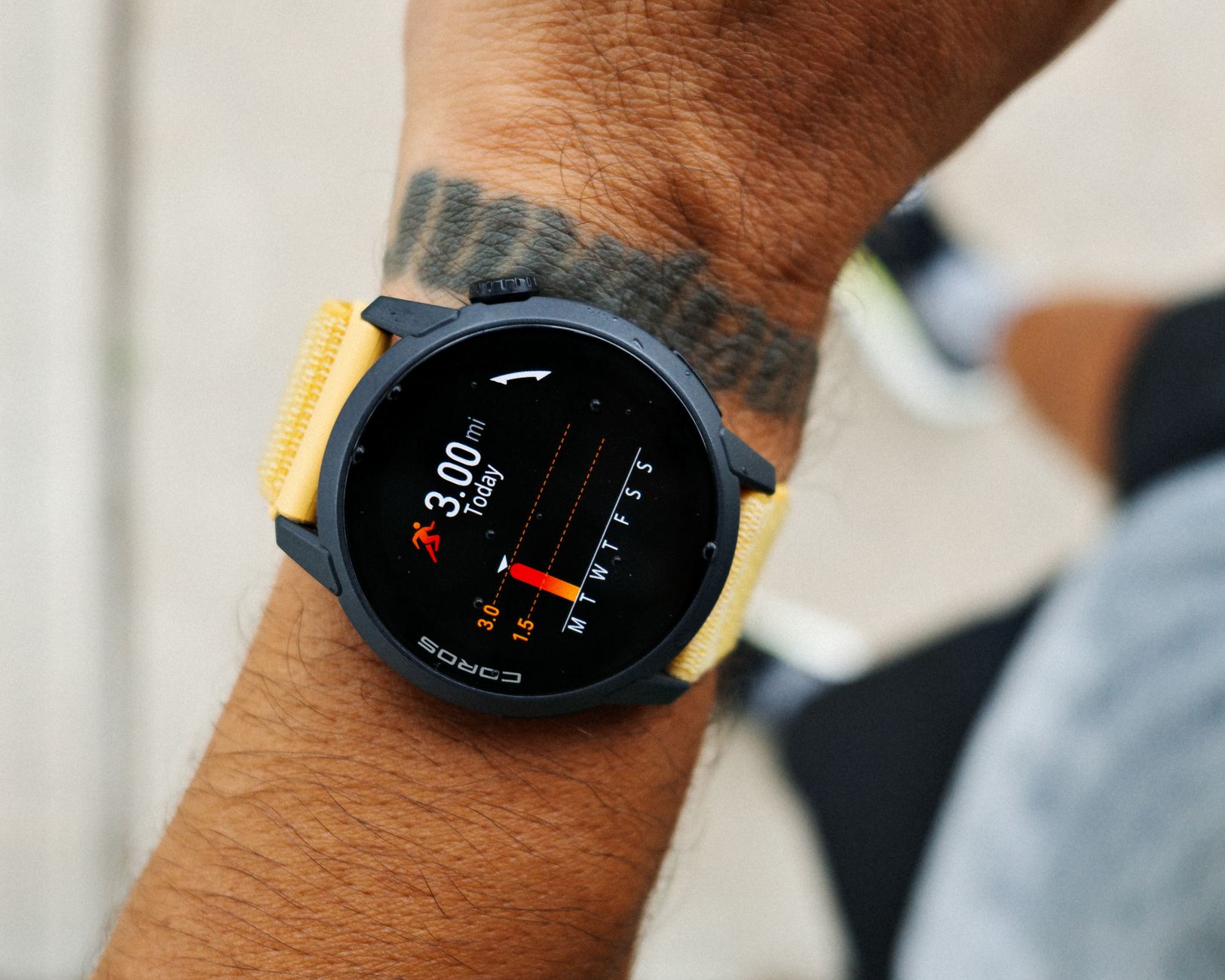
Photo by Eddie O.
When your monitor behaves erratically, stop briefly to check your wrist fit or manually count your pulse against a stopwatch. If the watch continues to fail, switch to a reliable chest strap for the remainder of your session. Always remember that unusual physiological symptoms like chest pain or extreme dizziness require immediate medical evaluation rather than a quick glance at your watch screen.
Common Problems With Wrist Heart Rate Readings and Practical Fixes
Optical heart rate tracking on your wrist relies on clean signals, proper placement, and stable skin conditions to give you reliable data. When your watch stumbles during a run, understanding the root cause helps you fix the issue quickly so your training stays on track.
Why the watch may show readings that are too low or too high
Loose contact allows ambient sunlight to leak under the casing, which completely scrambles the optical sensor. Cadence lock happens when the watch confuses your running rhythm with your actual pulse, often displaying a steady 160 beats per minute during a slow jog. Cold skin constricts blood vessels, while heavy sweat, dark tattoos, and thick body hair block the green LEDs from reading your blood flow. Arm position and excess movement also disrupt the sensor during hard efforts.
Fix these issues with simple adjustments before your next workout. Tighten the band slightly and slide it one finger-width above your wrist bone. Warm up indoors or wear sleeves to prime your skin before heading out into the cold. Clean the back glass regularly to remove salt crust, and compare your live wrist reading with your actual perceived effort if something feels off.
What to do when readings lag or disappear
Short intervals often finish before a wrist-based optical sensor can catch up to your surging heart rate. Because blood flow changes take a few seconds to register on your skin, high-intensity repeats require patience.
Lengthen your hard repetitions during testing, extend your warm-up routine, and ensure the watch sits firmly against your arm. Software updates often improve sensor algorithms, but a dedicated chest strap remains the best choice when immediate response matters. Restarting the device or re-pairing accessories helps only after you verify your fit and settings.
How to judge whether a problem is the device or the conditions
Isolate variables by repeating the exact same workout under controlled conditions and changing just one factor at a time. Compare your rest periods, steady aerobic runs, hills, and intervals across multiple training sessions. Save screenshots or export your activity data to spot repeatable patterns instead of reacting to one unusual run.
Is the Amazfit Active 3 Premium Heart Rate Tracking Good Enough for Runners?
Choosing the right running watch requires balancing your daily training habits against the limits of wrist-based optical sensors. Before buying any wearable device, you must weigh how well its heart rate monitor matches your specific running style, because a beginner logging easy miles needs entirely different features than a marathoner chasing precise intervals.
A strong fit for everyday training and aerobic consistency
Beginners and recreational runners will find that the watch suits daily aerobic routines well. Because easy-run efforts and long Sunday miles involve predictable arm swing, the optical sensor holds a steady pulse trend. Therefore, you can monitor your base-building intensity and track recovery without buying extra gear.
Consistent tracking over weeks of training helps you evaluate overall fitness progression. When you review your resting heart rate and easy-run data in the companion app, you gain reliable insights into how your body adapts to sustained training volume.
When a chest strap is worth adding
Interval-focused athletes and competitive marathoners often need faster data than a wrist monitor can provide. Because optical sensors experience slight delays during rapid pace changes, athletes doing frequent threshold repeats or heart rate cap workouts should pair the watch with a chest strap.
In this setup, the watch serves as your primary GPS device, training log, and visual display, while the chest strap supplies instantaneous heart rate data. This combination gives you the convenience of a smartwatch alongside the raw precision required for strict interval training.
A practical final verdict based on your training goals
Your purchasing decision depends entirely on your running objectives and budget. Beginners and casual runners can rely on the watch alone for convenience, broad fitness trends, and general workout feedback. However, runners who depend on tight physiological zones and rapid response times must add a chest strap to their kit.
Before you commit to a purchase, verify the current price, check the retailer return policy, and confirm software support. Testing the device against a trusted reference monitor gives you a clear baseline before you rely on its metrics for serious race preparation.
Conclusion
The Amazfit Active 3 Premium gives you useful heart rate guidance for daily training, but your wrist readings depend heavily on proper fit, stable conditions, and sensor response times.
Test the watch against a trusted reference monitor, keep your software current, and always combine your optical heart rate data with pace, breathing, and perceived effort.
The watch handles easy aerobic miles and long endurance runs well, yet competitive runners tackling fast intervals still need a chest strap for immediate tracking.
Wear the watch correctly, warm up before you start recording, compare your data across multiple sessions, and look for repeatable patterns during your next workout.


