

Altra Olympus 275 vs HOKA Speedgoat 7: Which Fits My Trails?
The Altra Olympus 275 vs HOKA Speedgoat 7 debate matters because both shoes aim at the same job, but they don’t feel the same once the trail turns rough. If I want one pair for long miles, mixed terrain, and steady comfort, the details start to matter fast, especially cushioning, stability, traction, fit, weight, and ride feel.
A shoe that feels perfect on smooth dirt can fall apart on loose rock, and a secure fit can feel cramped after a few hours. I’ll break down where each shoe shines, where it gives up ground, and which runner is likely to prefer one over the other, including what I’ve seen in the HOKA Speedgoat 7 trail shoe review and the Altra Olympus 7 detailed review.
What makes these two trail shoes worth comparing
I keep coming back to the Altra Olympus 275 vs HOKA Speedgoat 7 comparison because these shoes solve the same trail problems in very different ways. Both are made for long miles, rough ground, and runners who want more protection underfoot, but the fit and feel push them toward different kinds of use.
That difference matters on real trails. If I want more room up front and a more natural stance, one shoe speaks my language. If I want a smoother, more guided ride with a snug hold, the other is built for that.
Build Your Complete Race-Day Setup
The right shoe helps, but faster racing comes from better training, pacing, recovery, fueling, and execution.
More Guides for This Shoe
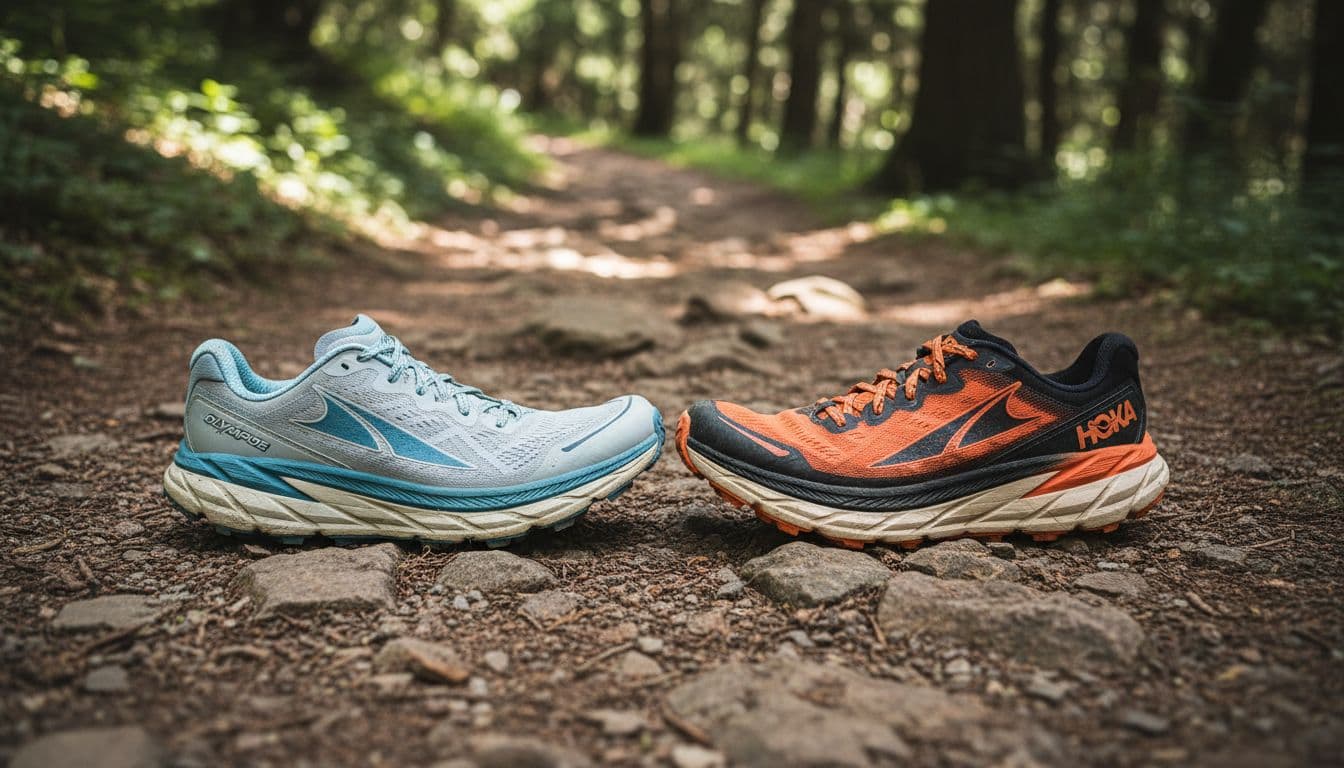
How the Olympus 275 and Speedgoat 7 approach the trail differently
I see the Olympus 275 as the shoe for runners who want space, comfort, and a more natural foot position. Altra usually gives the toes room to spread, and that matters when the miles stack up or the trail gets uneven. The feel is open and relaxed, like your foot has a little more breathing room inside the shoe.
The Speedgoat 7 takes a different path. HOKA leans into cushioning and an easy ride, so the shoe feels more guided and more cushioned than roomy. That makes it appealing if I want a softer landing and a smoother roll, especially on long days when I care more about steady comfort than a wide forefoot.
The real difference is simple, one shoe gives my toes more freedom, the other gives my stride more cushion and shape.
I also think this is why comparing the Altra Olympus 7 and HOKA Speedgoat 7 makes sense in the first place. They look like cousins on paper, yet they behave like two different trail partners.
Who each shoe is best for at a glance
At a glance, the Olympus 275 looks best for runners who hate a cramped toe box and want a more natural-feeling platform. Ultra runners, hikers who run, and anyone who spends hours on feet often gravitate toward that kind of fit because comfort starts to matter more than a locked-in race feel.
The Speedgoat 7 tends to fit technical trail runners and comfort-first runners who want soft protection with a more secure wrap. It also makes sense for people who move across mixed terrain and want one shoe that feels steady on climbs, descents, and long dirt stretches.
I would sort the buyers like this:
- Olympus 275: better for wide-footed runners, long-distance comfort seekers, and people who like toe room.
- Speedgoat 7: better for runners who want cushioning, a snug fit, and a smoother ride.
- Both shoes: worth a look if I want serious trail comfort without moving into a super-light race shoe.
If I want a deeper side-by-side look before I decide, I would also check the Speedgoat 7 against the Altra Olympus 7 for more fit and ride context.
Frequently asked questions
1. Why do runners compare the Olympus 275 and Speedgoat 7 so often?
Because both shoes target long trail miles and all-day comfort, but they solve fit and ride in different ways.
2. Is the Olympus 275 better for wide feet?
Usually, yes, because Altra often gives more room in the toe box.
3. Does the Speedgoat 7 feel narrower?
It usually feels more secure and more wrapped around the foot than an Altra-style shoe.
4. Which shoe feels more cushioned?
The Speedgoat 7 tends to feel more cushioned and guided underfoot.
5. Which shoe feels more natural?
The Olympus 275 usually feels more natural if I want room for toe splay and a less restrictive fit.
6. Is either shoe good for ultra distances?
Yes, both can work well for ultras, depending on whether I want space or a snugger cushioned feel.
7. Which one is better for hiking and running?
The Olympus 275 often appeals to hikers who run because of its roomy comfort and trail-friendly feel.
8. Which one is better for technical trails?
The Speedgoat 7 usually fits technical trails better if I want a more secure, controlled ride.
9. Can I use either shoe on mixed terrain?
Yes, both handle mixed terrain, but they may feel different on rocky or uneven ground.
10. Which shoe is better for long training runs?
That depends on my foot shape and comfort goals, but both are built for long efforts.
11. Do these shoes feel similar on the run?
No, they feel quite different once I start moving, especially in fit and underfoot feel.
12. Which shoe is better if I want more toe room?
The Olympus 275 is the better pick for more toe room.
13. Which shoe is better if I want a more locked-in fit?
The Speedgoat 7 usually gives the more locked-in feel.
14. Are these shoes meant for speed work?
They are more about comfort and protection than fast intervals or short race efforts.
15. Which one is better for rocky trails?
Both can work, but the Speedgoat 7 often feels more at home when the trail gets technical.
16. Which shoe is better for long descents?
The Speedgoat 7 may feel more secure on descents, while the Olympus 275 may feel more comfortable over time.
17. Do these shoes suit beginner trail runners?
Yes, especially if a beginner wants comfort and protection right away.
18. Which shoe is better for someone coming from road running shoes?
The Speedgoat 7 may feel more familiar to many road runners because of its cushioned ride, while the Olympus 275 feels more open and different.
19. Are these shoes only for mountain trails?
No, they also work on dirt paths, forest trails, and mixed off-road routes.
20. What is the biggest reason to compare them side by side?
The biggest reason is that fit changes everything, and these two shoes take opposite approaches to trail comfort.
Fit, toe room, and foot feel on long runs
Fit changes everything when the miles add up. On short runs, a shoe can feel fine even if the toe box is tight or the midfoot feels a little vague. After mile 10, your feet swell, your stride gets sloppy, and every small pressure point starts to feel louder.
That is why the Altra Olympus 275 vs HOKA Speedgoat 7 fit debate matters so much. One shoe gives more room to move, while the other gives a more wrapped, guided feel. For long runs, that difference can decide whether I finish smooth or spend the last hour thinking about my feet.
Toe box space and how your feet behave after mile 10
Toe room matters more on trails than on roads because the ground keeps changing under me. On descents, my toes slide forward and need space to spread instead of jam into the front of the shoe. In warm weather, feet swell faster, and a snug forefoot can start to feel like a trap.
That is where a more foot-shaped fit helps. A roomier forefoot gives my toes space to splay, which can feel calmer on long climbs, rocky descents, and all-day mountain efforts. REI’s trail running shoe guide also points out that trail shoes often use toe caps and protective fronts, so the fit up front matters even more when the terrain gets rough.
The Olympus 275 makes more sense if I want that open, natural feel. The Speedgoat 7 feels more controlled, so it may suit runners who want their foot held a little tighter through the full stride. I would choose space if I prize comfort over the long haul, but I would choose a snugger forefoot if I hate any side-to-side movement.
If my toes feel pressed on the first climb, they usually feel worse by the last descent.
Heel lock and midfoot security on uneven ground
Heel lock matters once the trail starts twisting through roots, rocks, and side hills. A shoe can have plenty of toe room and still feel sloppy if the rearfoot slides around. On uneven ground, that movement makes me work harder than I should.
The Speedgoat 7 usually makes more sense when I want a secure wrap for technical running. It feels better suited to sharp turns, loose rock, and faster trail pace where my foot needs to stay planted. The Olympus 275 feels more relaxed, which is great for steady miles, but that looser feel may not satisfy me if I run aggressively on broken terrain.
A good lockdown should feel like a firm handshake, not a squeeze. If the heel lifts too much, I notice rubbing on climbs and extra movement on descents. If the midfoot feels too open, I lose confidence on side hills, where a small shift can throw off my balance.
For runners who want more background on trail mechanics and fit choices, essential trail running form techniques can help connect shoe feel with how I move on the trail.
How the fit affects comfort for different foot shapes
Foot shape drives the decision more than shoe specs on a page. I know runners with wide forefeet who feel cramped in almost everything, and I know others with narrow heels who hate any extra space because it causes slop. The better shoe is the one that matches the way my foot fills the platform.
Here is the simple breakdown I would use:
| Foot type | Likely better match | Why it works |
|---|---|---|
| Wide forefoot | Olympus 275 | More toe room and a more natural spread |
| Narrow heel | Speedgoat 7 | More secure rearfoot hold |
| High-volume foot | Olympus 275 | More space through the upper and forefoot |
| Lower-volume foot | Speedgoat 7 | Snugger, more performance-oriented feel |
| Traditional performance fit | Speedgoat 7 | More wrapped and controlled on the run |
I usually think of the Olympus 275 as the better choice for runners who want room to relax, especially on ultras or long hiking runs. The Speedgoat 7 fits better if I like a more familiar running shoe shape and want the upper to hold my foot in place. RunRepeat’s guide to toe box fit also reinforces how toe box shape can affect comfort and stride mechanics, which matches what I feel on long runs.
FAQs about fit, toe room, and long-run feel
1. Which shoe gives more toe room, the Olympus 275 or Speedgoat 7?
The Olympus 275 usually gives more room in the forefoot.
2. Which shoe feels better on long descents?
The Speedgoat 7 often feels more secure on descents, while the Olympus 275 gives more toe space.
3. Do swollen feet matter on ultra runs?
Yes, swollen feet can make a snug shoe feel harsh late in a run.
4. Is a wide toe box always better?
No, because some runners prefer a more locked-in feel for stability and control.
5. Which shoe is better for hot weather?
The Olympus 275 usually handles swelling better because it gives the toes more room.
6. Which shoe works better for narrow feet?
The Speedgoat 7 is usually the safer pick for narrow feet.
7. What happens if my toes hit the front of the shoe?
I usually feel bruising, black toenails, or a hot spot on longer runs.
8. Is heel slip a big problem on trails?
Yes, especially on climbs, descents, and side hills where the foot keeps shifting.
9. Which shoe feels more relaxed for steady miles?
The Olympus 275 feels more relaxed and open.
10. Which shoe feels more performance-oriented?
The Speedgoat 7 feels more performance-oriented because of its snugger hold.
11. Can a roomy shoe still feel stable?
Yes, if the platform and upper hold the foot well enough.
12. Do I need more toe room for ultras?
Usually, yes, because feet swell and fatigue changes the way I land.
13. Which shoe is better for wide forefeet?
The Olympus 275 is usually the better match.
14. Which shoe is better for narrow heels?
The Speedgoat 7 usually locks the heel down better.
15. Does a snug fit help on technical trails?
Yes, because it can keep the foot from sliding inside the shoe.
16. Does a loose forefoot hurt downhill running?
It can, because the foot may slide forward and hit the front of the shoe.
17. Which shoe is better for runners who hate cramped toes?
The Olympus 275 is the clearer choice.
18. Which shoe is better if I want one shoe for long training runs?
That depends on my foot shape, but both can work well if the fit matches my needs.
19. Should I size up for long trail runs?
Sometimes, yes, especially if I run long distances or deal with foot swelling.
20. What matters most when choosing between these shoes?
Toe room, heel lock, and how secure the shoe feels after a few hours on the trail.
Cushioning, ride feel, and protection underfoot
Cushioning changes the whole mood of a trail run. One shoe can feel like a soft landing pad, while another feels more like a guided platform that keeps the stride moving. In the Altra Olympus 275 vs HOKA Speedgoat 7 matchup, that difference shapes how fresh my legs feel when the miles keep coming.
What the cushioning feels like when the miles stack up
Over long runs, cushioning is about more than softness. I want a shoe that takes the sting out of repeated impacts, but I also want enough support that my legs don’t feel like they are sinking into the foam. The Olympus 275 feels more spacious and protective in a relaxed way, while the Speedgoat 7 gives a smoother, more guided underfoot feel.
That difference matters late in the run. The Olympus 275 can feel calming when I want my feet to spread and settle, especially on steady climbs or long forest miles. The Speedgoat 7 tends to feel a little more lively and rolled forward, so it can help me keep a rhythm when fatigue starts to drag my stride down.
If I want a broad look at how trail cushioning affects real-world comfort, REI’s trail-running shoe guide makes a useful point, cushion and softness are not the same thing. That matches what I feel here. One shoe feels plush and open, the other feels cushioned but more shaped.
The best late-run cushioning does more than feel soft, it helps me keep my form together.
Ground feel versus max protection on rough terrain
Ground feel and protection sit on opposite ends of the same trail shoe problem. If I want to feel the trail, I get more feedback through the sole. If I want to ignore sharp rock edges and rooty surprises, I usually give up some of that connection.
The Olympus 275 leans toward a more protected, spacious feel, but it still keeps me aware of the terrain underfoot. The Speedgoat 7 leans harder into max protection, so rocky sections feel less harsh and the shoe does more of the shielding work for me. That can be a big deal on long days when every stone starts to feel personal.
I usually think about it like this:
- More ground feel: better if I want precision, trail feedback, and quick footing adjustments.
- More protection: better if I run rocky routes, hike-run steep terrain, or stay out long enough to feel every sharp edge.
- Best fit for me: depends on whether I care more about connection or comfort after mile 15.
If my trails are smooth and rolling, I may prefer a bit more feel. If they are jagged and broken, I want the shoe that keeps my foot from taking the hit.
Stability when the trail gets messy
Stability is not just stack height. A tall shoe can still feel steady if the platform is broad, the foot sits well inside it, and the ride stays controlled on uneven ground. A lower shoe can still feel awkward if the base is narrow or the foot slides around inside.
The Olympus 275 can feel planted when the platform matches my foot shape, especially if I want room without feeling pinned in. The Speedgoat 7 often feels more confidence-building on off-camber terrain because the ride is more shaped and secure. That matters on loose gravel, slanted hillside paths, and technical stretches where my foot keeps searching for the next flat spot.
I notice stability most when the trail stops cooperating. On gravel, a shoe with a calm platform helps me avoid constant micro-corrections. On roots and rock steps, a secure ride keeps my body from wasting energy trying to stabilize every landing.
A shoe that feels stable in the store can still feel shaky on the trail if the base and fit do not work together. A wide, settled platform usually helps more than stack height alone.
Frequently asked questions
1. Which shoe feels softer underfoot, the Olympus 275 or Speedgoat 7?
The Olympus 275 usually feels softer and more open, while the Speedgoat 7 feels more guided.
2. Which shoe feels more protective on rocky trails?
The Speedgoat 7 usually feels more protective when the trail gets sharp and broken.
3. Does more cushioning always mean more comfort?
No, because comfort also depends on fit, support, and how the foam behaves late in the run.
4. Which shoe helps my legs feel fresher on long runs?
Both can help, but the Olympus 275 may feel better if I want room and less foot squeeze.
5. Which shoe has the more bouncy ride?
The Speedgoat 7 usually feels a little more lively and rolled forward.
6. Which shoe gives more trail feedback?
The Olympus 275 generally gives more natural foot room and a more open feel.
7. Which shoe is better for sharp rock protection?
The Speedgoat 7 is usually the better choice for sharp rock and root-heavy trails.
8. Is a softer shoe always better for ultras?
No, because a shoe can be soft but still feel unstable or tiring after hours on rough ground.
9. Which shoe feels less harsh on descents?
The Speedgoat 7 often feels more shielding on steep, rocky descents.
10. Which shoe feels more natural when I land?
The Olympus 275 usually feels more natural if I want room and a less forced underfoot feel.
11. Does protection underfoot matter on easy trails?
Yes, because even mellow trails can hide roots, stones, and hard-packed bumps.
12. Which shoe is better for long mountain days?
The Speedgoat 7 often suits long mountain days because it gives more shielding and a more controlled ride.
13. Can a wide platform help stability?
Yes, a broader platform can help the shoe feel calmer on uneven ground.
14. Does stack height make a shoe unstable?
Not by itself, because the shape of the platform and the fit matter just as much.
15. Which shoe feels more cushioned on long mileage?
The Speedgoat 7 usually feels more cushioned in a smooth, guided way.
16. Which shoe works better if I want ground contact?
The Olympus 275 is the better pick if I want more trail feel.
17. Is max protection worth it on all trails?
No, because some runners want more feel and less bulk on smoother routes.
18. Which shoe is better for loose gravel?
The Speedgoat 7 usually feels more secure when the ground shifts underfoot.
19. Which shoe is better if I fatigue late in runs?
The Olympus 275 can feel kinder if I want roomy comfort, while the Speedgoat 7 can help me keep a smoother stride.
20. What matters most in cushioning and protection?
I care most about how the shoe feels after hours, not just how it feels in the first mile.
Traction, grip, and control when the surface changes
Traction is where a trail shoe stops feeling theoretical and starts proving itself. Dirt, rock, wet patches, and light mud all ask for different things, so I pay attention to how each shoe bites, releases, and stays calm when the ground changes under me.
In the Altra Olympus 275 vs HOKA Speedgoat 7 matchup, both shoes are built for off-road miles, but they approach grip in different ways. One tends to feel more open and natural, while the other feels more guided and confident when the trail turns steep or messy.
How each outsole handles dirt, rock, and light mud
On dry dirt, both shoes can do the job well, but they don’t feel identical. The Olympus 275 gives me a more relaxed, planted feel, while the Speedgoat 7 usually feels a little more assertive when the trail is loose or uneven. On hard-packed dirt and forest paths, either shoe is capable, but the ride feel changes how much trust I put into each step.
Rock is where the details matter more. If the surface is dry, I want rubber that grabs instead of skates, and if the rock is dusty or slightly damp, I want a lug pattern that still finds purchase. For that reason, the Speedgoat 7 often feels better when the route mixes stone, grit, and quick direction changes. The Olympus 275 can still hold its own, but it feels more about comfort and less about quick bite.
Light mud is a different story. I don’t expect either shoe to act like a true mud specialist, so I look for how fast the lugs clear and how much the sole clogs. Widely spaced lugs usually help mud shed better, which is why REI’s trail-running shoe guide recommends that style for wet and loose conditions. In that kind of terrain, the Speedgoat 7 usually has the edge for mixed trail running, while the Olympus 275 is better when mud is only an occasional patch, not the main event.
Light mud is tolerable. Deep, sticky mud is where trail shoes start telling the truth.
Downhill confidence and braking control
Downhill running exposes every weak spot in traction. When I lean back to brake, my feet need to stay calm and the outsole needs to hold without slipping across the trail. If the shoe loses control here, the run feels sketchy fast.
The Speedgoat 7 usually gives me more confidence on steep descents because it feels more locked in and more ready to dig into the trail when I need to slow down. That matters on loose rock, switchbacks, and fast downhill sections where braking control matters as much as forward grip. The outsole and ride work together in a way that helps me stay composed.
The Olympus 275 can still descend well, but it leans more toward steady comfort than aggressive bite. That means I may feel more relaxed on moderate descents, yet less sharp when I need to brake hard or cut quickly around a turn. If my trails are fast and technical, the Speedgoat 7 feels easier to trust. If they are smoother and less abrupt, the Olympus 275 stays comfortable and stable enough.
I also think descending confidence depends on how the shoe handles sudden changes in angle. A shoe that holds well on straight lines but slides in corners can make me second-guess every step. The better downhill shoe gives me a sense that the outsole is working with me, not against me.
Technical trails versus smoother paths
Technical trails demand quick reactions. Rocks pop up without warning, roots turn slick after shade or rain, and side hills force the shoe to hold a line. On that kind of ground, I want the shoe that feels more precise and secure, and the Speedgoat 7 usually fits that job better.
The Olympus 275 makes more sense when the route is less demanding. Rolling dirt paths, forest roads, and mixed trail runs suit its more open, comfort-first feel. It still handles rough patches, but it does not seem built to shine when I need fast foot placement and extra bite on broken terrain.
A simple way to split them is this:
- Speedgoat 7: better for rocky climbs, steep descents, and trail changes that come fast.
- Olympus 275: better for smoother singletrack, long dirt roads, and steady mileage.
- Both shoes: workable on mixed routes, as long as the ground stays reasonable.
If I spend more time on rugged mountain trails, I want the shoe that feels ready for surprise moves. If I run more on forest paths and rolling trails, the Olympus 275 starts to look like the easier fit. For runners who want another technical trail option with strong grip, the Nike Terra Kiger 10 trail grip analysis is a useful point of comparison.
Frequently Asked Questions
1. Which shoe has better traction on dry dirt?
Both do well on dry dirt, but the Speedgoat 7 usually feels more secure when the surface gets loose.
2. Which shoe grips rock better?
The Speedgoat 7 usually feels stronger on technical rock, especially when I need more control.
3. Does the Olympus 275 work on light mud?
Yes, but it is better for occasional muddy patches than for long muddy stretches.
4. Is the Speedgoat 7 good for wet rock?
It usually performs better than the Olympus 275 when the ground is wet or slick.
5. Which shoe is better for steep descents?
The Speedgoat 7 gives me more downhill confidence and stronger braking control.
6. Which shoe feels more stable on loose gravel?
The Speedgoat 7 usually feels more planted when the trail shifts underfoot.
7. Can I run technical trails in the Olympus 275?
Yes, but it feels better on moderate technical terrain than on the most demanding routes.
8. Which shoe clears mud better?
The Speedgoat 7 usually handles light mud better because it feels more trail-ready.
9. Do wide lugs always mean better grip?
No, because lug shape, spacing, and rubber compound all affect traction.
10. Which shoe is better for forest roads?
The Olympus 275 often feels better on forest roads and smoother dirt paths.
11. Which shoe is better for rocky mountain trails?
The Speedgoat 7 is usually the stronger pick for rocky mountain trails.
12. Does traction matter more on descents than climbs?
Both matter, but poor descent grip tends to feel riskier because speed builds fast.
13. Can a trail shoe feel grippy and still be comfortable?
Yes, and that is part of what makes this comparison interesting.
14. Which shoe feels better when I need to change direction fast?
The Speedgoat 7 usually feels more secure for quick direction changes.
15. Is the Olympus 275 only for easy trails?
No, it can handle rough ground, but it shines more on smoother routes.
16. Which shoe handles mixed terrain better?
The Speedgoat 7 usually feels more confident across changing surfaces.
17. How do I know if I need more aggressive traction?
If I run rocky, wet, or steep trails often, I usually benefit from stronger traction.
18. Do either of these shoes work for road-to-trail runs?
Yes, especially on routes where pavement, dirt, and light trail all mix together.
19. Which shoe feels safer on side hills?
The Speedgoat 7 often feels more secure on off-camber ground.
20. What matters most when the surface changes?
I look for grip, braking control, and how steady the shoe feels when the terrain shifts fast.
Weight, pace, and how each shoe moves with me
Weight shows up most when I ask a shoe to move fast. On easy miles, I can ignore a few extra ounces. Once I start climbing, racing, or chasing tired legs late in a run, I feel every bit of bulk.
That is where the Altra Olympus 275 vs HOKA Speedgoat 7 comparison gets more interesting. One shoe can feel easier to toss forward, while the other feels smoother and more planted when I want protection over quick turnover.
When a lighter feel matters most
Weight matters most when I ask for speed on trail. During tempo runs, a lighter shoe helps my feet turn over faster, and it feels less like I am dragging anchors uphill. On climbs, every step costs more, so even small differences in feel stand out quickly.
I notice it again in races. Early on, a heavier shoe may feel fine, but late-race fatigue changes the story. My hips get less snappy, my cadence drops, and a shoe with a livelier feel can make the work seem a little easier. That is why runners who like to push pace often want a shoe that feels quick, responsive, and easy to swing through the stride.
The runner who usually values this most wants a lively underfoot feel. I usually think of the person who likes fast trail repeats, steady uphill efforts, or races where rhythm matters more than plush comfort. If I care about turning effort into motion without feeling held back, I pay close attention to weight.
For a deeper look at how mass affects pace, I also find weight and running economy explained helpful when I want to connect shoe feel with how my body spends energy.
When fatigue builds, a shoe that feels light can keep my stride from feeling stuck in mud.
How the shoes respond on climbs and fast descents
Climbs expose the difference between a shoe that just fits and a shoe that moves with me. When I want to pick up the pace uphill, I notice whether the shoe swings through cleanly or feels a little slow and heavy at the toe. The Speedgoat 7 usually feels easier to roll forward, so it can help me keep momentum without making every uphill step feel like a grind.
The Olympus 275 feels different. It can still climb well, but it tends to feel more grounded and expansive than snappy. That works if I care more about comfort and toe room, yet it may not feel as quick when I want a faster, lighter rhythm on steep grades.
Downhill, I care about how the shoe lands and settles. A shoe that feels too bulky can make fast descents feel delayed, like my foot is always half a beat behind the terrain. Meanwhile, a shoe with a cleaner swing can make quick adjustments easier, which matters when I hit loose rock or a sharp turn at speed.
If I want to work on pace and turnover, stride frequency and running efficiency is a smart place to connect the dots between foot speed and trail rhythm. I also like seeing how other trail shoe features affect uphill and downhill control in this trail shoe feature guide, especially when traction and momentum work together.
The difference between nimble and effortless
I don’t always want a shoe that feels nimble. Sometimes I want one that feels effortless instead. Those are different things, and the gap matters when I compare the Altra Olympus 275 vs HOKA Speedgoat 7 on real trails.
A nimble shoe feels quick, sharp, and ready to change direction. I feel it when I need to pop over rocks, adjust on a switchback, or accelerate out of a climb. The Speedgoat 7 usually leans closer to that feel because it rolls forward with less resistance.
An effortless shoe feels smooth and protective. It makes the run feel less harsh, even if it does not feel especially fast. The Olympus 275 fits that idea better for me, because it gives a roomy, calm ride that reduces pressure when the miles keep building. I may not feel as springy, but I often feel more settled.
The easiest way I separate them is simple:
- Nimble means quicker foot movement and faster response.
- Effortless means smoother movement and less strain.
- My best match depends on whether I care more about speed or staying fresh.
If I run short, steep, and technical, nimble can win. If I run long, steady, and rough, effortless can save my legs.
Frequently Asked Questions
1. Which shoe feels lighter on the run, the Olympus 275 or Speedgoat 7?
The Speedgoat 7 usually feels easier to move in at pace, while the Olympus 275 feels more substantial but relaxed.
2. Does shoe weight matter on easy trail runs?
It matters less on easy runs, but I still notice it when the distance gets long.
3. Which shoe feels better for tempo trail runs?
The Speedgoat 7 usually feels better when I want a quicker rhythm.
4. Why does weight matter more on climbs?
Uphill running increases effort, so extra bulk feels more obvious with every step.
5. Which shoe is better late in a race?
That depends on what I want, but a lighter-feeling shoe often helps when fatigue sets in.
6. Is a lighter shoe always faster?
No, because fit, cushioning, and traction can matter just as much.
7. Which shoe swings through faster?
The Speedgoat 7 usually feels easier to swing through the stride.
8. Which shoe feels more planted?
The Olympus 275 often feels more planted and calm underfoot.
9. Do I feel shoe weight more on downhill runs?
Yes, especially when I need quick foot placement and fast balance changes.
10. Which shoe is better for racing?
The Speedgoat 7 often suits runners who want a livelier feel for race-day effort.
11. Which shoe is better for ultras?
Both can work, but the Olympus 275 may appeal more if I want comfort first.
12. Does a heavier shoe always mean more protection?
No, but many protective shoes do feel a bit bulkier.
13. Which shoe feels more responsive?
The Speedgoat 7 usually feels more responsive when I pick up the pace.
14. Which shoe feels more relaxed?
The Olympus 275 usually feels more relaxed and roomy.
15. Should I care about shoe weight if I hike-run?
Yes, because long climbs make heavy shoes feel slower and more tiring.
16. Which shoe helps with cadence?
The Speedgoat 7 usually feels easier if I want to keep turnover moving.
17. What kind of runner wants a lively feel?
Runners who race, do tempo efforts, or like quick footwork usually want that feel.
18. Can a heavier shoe still feel smooth?
Yes, if the ride is balanced and the platform moves well with my stride.
19. Which shoe is easier to control at speed?
The Speedgoat 7 usually feels easier to place quickly on fast, changing terrain.
20. What should I focus on most, weight or comfort?
I focus on the shoe that lets me keep pace without beating up my legs.
Durability, value, and which shoe fits my running life
When I compare the Altra Olympus 275 vs HOKA Speedgoat 7, I stop thinking about specs and start thinking about weeks, months, and miles. I want to know which shoe keeps showing up when the calendar fills with long runs, muddy mornings, and race prep blocks.
Durability matters because trail shoes don’t live easy lives. Value matters because a shoe that feels right on paper can still miss the mark if it doesn’t match how I actually run.
What kind of mileage each shoe is built to handle
For daily training, I want a shoe that stays comfortable after repeat abuse. The Olympus 275 looks better suited to high mileage because it feels roomy, protective, and calm over long periods. That kind of comfort matters when I am stacking easy runs, weekend long runs, and back-to-back trail days.
The Speedgoat 7 also handles serious mileage, but I see it more as a specialized pick. It feels better when I want a secure, cushioned ride for long runs, technical routes, or race efforts, especially if I want a shoe that feels ready for more than one surface. If I only need one trail shoe for everything, the Speedgoat 7 can do a lot, but the Olympus 275 feels more like the mileage workhorse.
A simple way to view it is this:
- Olympus 275: better for frequent trail use, long training blocks, and high-mileage comfort.
- Speedgoat 7: better for demanding routes, mixed terrain, and runners who want a more guided feel.
- Both shoes: strong options for ultras if the fit matches my foot and my goals.
That said, I don’t judge durability by outsole alone. Upper materials, fit stability, and how often I run rocky terrain all shape how long a shoe stays useful. For a wider look at trail shoe construction and durability patterns, RunRepeat’s best trail running shoes guide is a helpful comparison point.
How the price feels based on what I get
Price only feels fair when the shoe earns its keep. If I pay more for a shoe that saves my feet on long runs, that starts to feel worthwhile fast. If I pay for features I never use, the value drops just as quickly.
The Olympus 275 feels like a strong comfort-first investment. I get room, protection, and a platform that makes sense for long days on trail. The Speedgoat 7 feels like a better value if I want a shoe that handles a wider range of trail situations, especially when I need grip, cushioning, and a secure fit in one package.
I look at value through three questions:
- Does the shoe stay comfortable after hours?
- Can I use it for more than one kind of run?
- Does it help me run the way I already run?
If the answer is yes, the shoe feels worth it. A high-end trail shoe should save me from needing three different pairs for every route. That is where the Nike Ultrafly Trail review also comes into the picture, because it shows how a more specialized shoe can make sense only when speed matters most.
The best value is the shoe I keep reaching for, not the one that looked cheapest in the cart.
Which shoe makes more sense for my running calendar
My running calendar decides the winner more than the box price does. If I spend most of the season on long training runs, recovery miles, and weekend trail outings, the Olympus 275 makes more sense because it feels like a shoe I can live in. It is the pair I would keep ready when I want comfort to do the heavy lifting.
If my calendar includes races, technical trail blocks, or mixed-terrain workouts, the Speedgoat 7 becomes easier to justify. It feels better when I need one shoe that can handle training and still show up on race day without feeling out of place. That is where it earns its keep.
I would match them like this:
- Training block shoe: Olympus 275 if I want comfort and space, Speedgoat 7 if I want more structure.
- Race-day pick: Speedgoat 7 for more confidence on technical courses.
- All-season trail shoe: Olympus 275 if I want a steady, high-mileage partner.
- One-shoe rotation: Speedgoat 7 if my routes vary a lot and I want a more versatile ride.
The right choice depends on use case, not just sticker price. A shoe that fits my training rhythm well will usually give me better value than a cheaper shoe that stays in the closet. The more often I use it, the more honest the purchase becomes.
Frequently asked questions
1. Which shoe is more durable, the Olympus 275 or Speedgoat 7?
Both are built for trail abuse, but the Olympus 275 feels better suited to high-mileage use, while the Speedgoat 7 feels more specialized.
2. Which shoe is better for daily trail training?
The Olympus 275 usually makes more sense for daily trail training because it feels roomy and comfortable over long stretches.
3. Which shoe is better for ultras?
Both can work for ultras, but the Olympus 275 feels more like a high-mileage comfort pick.
4. Which shoe is better for race day?
The Speedgoat 7 usually feels better for race day, especially on technical or mixed-terrain courses.
5. Does value mean the cheaper shoe?
No, value means the shoe that gives me the most useful miles for my type of running.
6. Which shoe is more versatile?
The Speedgoat 7 usually feels more versatile across different trail conditions.
7. Which shoe is better for frequent trail use?
The Olympus 275 usually makes more sense if I run trails often and want lasting comfort.
8. Which shoe should I buy if I only want one trail pair?
I would choose based on fit first, then decide whether I want the Olympus 275’s comfort or the Speedgoat 7’s secure ride.
9. Does the upper matter for durability?
Yes, because a tough outsole doesn’t help much if the upper wears out early.
10. Which shoe handles long training blocks better?
The Olympus 275 usually feels better for long training blocks because it stays comfortable when the miles pile up.
11. Which shoe is better for mixed terrain?
The Speedgoat 7 usually handles mixed terrain more confidently.
12. Is the Speedgoat 7 too specialized for everyday running?
No, but it feels more tailored to runners who want a secure, cushioned, trail-ready shoe.
13. Is the Olympus 275 too niche?
No, it feels broad enough for long runs, hikes, and frequent trail days.
14. Which shoe gives better long-term value?
That depends on how I run, but the Olympus 275 usually gives strong value for high-mileage comfort.
15. Which shoe is better if I race only a few times a year?
The Olympus 275 may be the smarter buy if most of my running is training, not racing.
16. Which shoe is better if I train on rough trails year-round?
The Speedgoat 7 usually fits that use case better because it feels more secure and trail-specific.
17. Can I use either shoe for hiking?
Yes, both can work for hiking, but the Olympus 275 usually feels more relaxed over long hours.
18. Which shoe wears well when I run often?
The Olympus 275 usually looks better for runners who log frequent trail miles.
19. What matters most when judging trail shoe value?
I look at comfort, versatility, and how often I actually reach for the shoe.
20. How do I know which one fits my running life best?
I match the shoe to my calendar, if I need a comfort-first high-mileage trainer, I lean Olympus 275, and if I need a more secure all-around trail shoe, I lean Speedgoat 7.
What I would choose based on the kind of runner I am
My choice between the Altra Olympus 275 vs HOKA Speedgoat 7 comes down to how I run, not just what looks good on the shelf. If I care most about foot room and a natural stance, I reach one way. If I want a smoother, more cushioned ride with a more secure hold, I reach the other.
That split gets clearer the longer the run gets. On fresh legs, both shoes can feel good. After a few hours on dirt, rock, and climb-heavy trails, the right match starts to feel obvious.
I have wide feet or want a natural toe splay
If I have wide feet, I would choose the Olympus 275 first. The extra forefoot room gives my toes space to spread, which feels better when my feet swell or when I spend hours on uneven ground. That open shape can feel like a small relief on long runs, because my forefoot is not fighting the shoe with every step.
The Speedgoat 7 is more secure and more wrapped, but that can feel tighter up front if I want a foot-shaped fit. Over long efforts, that difference matters. Room helps me avoid hot spots, toe pressure, and that boxed-in feeling that turns a good run into a long complaint.
I also like how the Olympus 275 lets my foot settle naturally on climbs and descents. The fit feels calmer, which is exactly what I want when the miles keep adding up.
If my toes need room to move, I would rather start there than hope a tighter shoe loosens up later.
I want plush comfort and a smooth ride
If comfort is my top priority, I would pick the Speedgoat 7. It feels softer, smoother, and more guided underfoot, which helps when I want my stride to roll instead of work. That matters on long runs, because a smooth ride can save energy when my legs start to fade.
The Olympus 275 is comfortable too, but its comfort feels more open and spacious. The Speedgoat 7 feels more like a cushioned trail cruiser, especially if I want soft landings and easy transitions. That makes it a strong choice for runners who value a protected, forgiving feel on mixed ground.
If I spend long hours on trail and care about reducing impact without losing rhythm, the Speedgoat 7 is the cleaner pick. It gives me the kind of ride that feels steady from the first mile to the last.
I race trails and want confidence on varied terrain
If I race trails, I would lean toward the Speedgoat 7. It feels more secure, more controlled, and better prepared for fast changes in terrain. That matters when the course mixes dirt, rock, climbs, and descents, because I want a shoe that keeps up without making me think too hard.
The Speedgoat 7 gives me a stronger sense of grip and protection when the trail gets messy. I can press harder on technical sections and trust the shoe a little more when I need to brake, turn, or push downhill. That kind of confidence can make a real difference in a race.
For runners who want to compare more trail shoe choices before deciding, I like the way Altra vs HOKA running shoes frames the differences between fit and ride. It lines up with what I feel here, one shoe is open and natural, the other is smoother and more race-ready.
I need one dependable shoe for training and adventure runs
If I want one shoe for weekly miles, long weekends, and occasional rough trails, I would choose the Speedgoat 7. It feels more versatile across different terrain, and it gives me enough cushioning and traction to handle a wide range of runs without feeling out of place. That makes it easier to keep one pair in rotation and trust it on more days.
The Olympus 275 is excellent for comfort-first miles, but the Speedgoat 7 gives me a little more range. I can use it for steady training, longer outings, and tougher routes without feeling like I picked the wrong tool. That matters if my running changes from week to week.
If my trail calendar is mixed and unpredictable, the Speedgoat 7 is the safer all-around choice. It is the pair I would grab when I want one shoe to handle more than one job.
20 quick FAQs for choosing my pair
1. Which shoe is better if I have wide feet?
I would choose the Olympus 275 because it usually gives more room in the forefoot.
2. Which shoe feels more natural at the toe box?
The Olympus 275 feels more foot-shaped and relaxed up front.
3. Which shoe is better for long runs?
That depends on my foot shape, but the Olympus 275 is better for room and the Speedgoat 7 is better for smooth comfort.
4. Which shoe feels softer underfoot?
The Speedgoat 7 usually feels softer and more cushioned.
5. Which shoe feels more guided on the run?
The Speedgoat 7 feels more shaped and controlled.
6. Which shoe is better for race day?
I would choose the Speedgoat 7 for most trail races.
7. Which shoe is better for technical trails?
The Speedgoat 7 usually gives me more confidence on rough ground.
8. Which shoe is better for long training miles?
The Olympus 275 is a stronger pick if I care most about space and comfort.
9. Which shoe is better for swollen feet on long runs?
The Olympus 275 is usually the better choice.
10. Which shoe feels more secure in the heel?
The Speedgoat 7 usually feels more locked in.
11. Which shoe is better for descents?
The Speedgoat 7 gives me more control on steep or loose descents.
12. Which shoe is better for hikers who run?
I would lean toward the Olympus 275 for its roomy comfort.
13. Which shoe is better for mixed terrain?
The Speedgoat 7 usually handles mixed terrain more confidently.
14. Which shoe is better for rocky trails?
The Speedgoat 7 is the better pick when rocks start to dominate the route.
15. Which shoe feels lighter on the run?
The Speedgoat 7 usually feels easier to move in.
16. Which shoe is better if I hate cramped toes?
The Olympus 275 is the clear choice.
17. Which shoe is better for one-shoe trail use?
The Speedgoat 7 is usually more versatile for different kinds of runs.
18. Which shoe is better for comfort-first runners?
The Speedgoat 7 is the stronger comfort pick if I want plush cushioning.
19. Which shoe is better if I want a more natural stance?
The Olympus 275 is the better fit for that feel.
20. What is the easiest way to decide between them?
I choose the Olympus 275 if I want room and natural toe spread, and I choose the Speedgoat 7 if I want cushioning, grip, and a smoother ride.
Frequently asked questions about the Altra Olympus 275 and HOKA Speedgoat 7
I get a lot of the same questions when runners compare these two shoes. That makes sense, because the Altra Olympus 275 vs HOKA Speedgoat 7 choice often comes down to fit, comfort, and the kind of trail under my feet.
1. Which shoe gives me more toe room?
The Olympus 275 gives me more space up front. If I hate cramped toes, that extra room can make a long run feel much easier.
2. Which shoe feels more cushioned underfoot?
The Speedgoat 7 usually feels more cushioned and shaped for a smooth ride. I notice that most on longer runs and rougher routes.
3. Which one is better for wide feet?
I would start with the Olympus 275 if I have a wide forefoot or want more toe splay. It feels more forgiving when my feet swell.
4. Which shoe is better for narrow feet?
The Speedgoat 7 usually works better for narrower feet because it feels more secure and wrapped.
5. Which shoe is better for technical trails?
I would choose the Speedgoat 7 for technical ground. It feels more controlled when I need quick foot placement and better downhill confidence.
6. Which shoe is better for long ultra runs?
Both can work, but I would pick based on fit first. The Olympus 275 suits runners who want room and comfort, while the Speedgoat 7 suits runners who want a snug, cushioned ride.
7. Which shoe feels more natural on the run?
The Olympus 275 usually feels more natural if I like a roomy forefoot and a less restrictive stance.
8. Which shoe feels more stable on uneven ground?
The Speedgoat 7 often feels more secure on uneven terrain because it wraps the foot more tightly.
9. Which one handles descents better?
I trust the Speedgoat 7 more on steep or loose descents. It feels more planted when I need to brake and turn.
10. Which one is better for rocky trails?
The Speedgoat 7 usually has the edge on rocky trails because it feels more protective and more confident underfoot.
11. Which shoe is better for hikers who run?
I would lean toward the Olympus 275 for hike-run days. The roomy fit and long-wear comfort make it easier to stay out longer.
12. Which shoe is lighter on the feet?
The Speedgoat 7 usually feels easier to swing through the stride. That matters when I want a little more quickness on climbs and flatter stretches.
13. Which shoe is better if I want one pair for everything?
I would pick the Speedgoat 7 if I need one trail shoe for mixed terrain. It handles a wider range of runs more easily.
14. Which shoe is better for smoother dirt trails?
The Olympus 275 feels great on smoother dirt and steady mileage. It gives me comfort without asking for much from my feet.
15. Which shoe is better in light mud?
The Speedgoat 7 usually does better in light mud. It feels more ready for changing trail conditions.
16. Which shoe works better for road-to-trail routes?
The Speedgoat 7 usually feels more versatile for mixed road and trail use. It keeps a smooth feel while still handling dirt well.
17. Which shoe is more comfortable after mile 10?
That depends on my foot shape, but I usually feel the Olympus 275 more when I want room, and the Speedgoat 7 more when I want a smooth, cushioned hold.
18. Which shoe is better for runners who hate a snug fit?
The Olympus 275 is the clearer pick. It gives my toes more space and feels less boxed in.
19. Which shoe is better for runners who want a locked-in feel?
The Speedgoat 7 is the better choice if I want my foot to feel held in place on rough trails.
20. What is the fastest way to choose between them?
I choose the Olympus 275 if I want room, natural toe spread, and long-run comfort. I choose the Speedgoat 7 if I want a more secure fit, stronger downhill control, and a smoother ride across changing terrain.
Conclusion
The Altra Olympus 275 vs HOKA Speedgoat 7 choice comes down to what I want most on the trail. If I want room for my toes, a more natural feel, and long-run comfort, I lean toward the Olympus 275. If I want a smoother ride, more secure hold, and stronger confidence on rough ground, I reach for the Speedgoat 7.
That is the cleanest way to separate them. The Olympus 275 fits runners who value space and steady comfort, while the Speedgoat 7 fits runners who want a more guided, cushioned trail shoe that feels ready for mixed terrain.
If my feet need freedom, I choose the Olympus 275. If my trails demand grip, control, and a snugger ride, I choose the Speedgoat 7.


