

Altra Lone Peak 9 vs Topo Athletic MTN Racer 4: Which Trail Shoe Fits Better?
Choosing between the Altra Lone Peak 9 vs Topo Athletic MTN Racer 4 comes down to how you want a trail shoe to feel when the miles stack up. Both are popular with runners who want comfort, grip, and room for toe movement, but they don’t serve the same kind of trail runner.
One shoe may fit better, feel more stable, or handle rough ground with more confidence, depending on your foot shape and the trails you run. The real differences show up in fit, cushioning, traction, durability, and how each shoe handles long trail days, technical terrain, and mixed-use runs. This comparison will help you figure out which one matches your needs best.
What each shoe is built to do on the trail
The Altra Lone Peak 9 vs Topo Athletic MTN Racer 4 comparison starts with purpose. These shoes both live in the trail category, but they solve different problems once your feet hit dirt, rock, and roots.
One is built for comfort, natural foot shape, and steady all-day use. The other is built for more hold, more protection, and more confidence when the trail gets rough. If you match the shoe to the route, the choice gets a lot easier.
Build Your Complete Race-Day Setup
The right shoe helps, but faster racing comes from better training, pacing, recovery, fueling, and execution.
More Guides for This Shoe
How the Altra Lone Peak 9 feels on easy miles and long runs
The Lone Peak 9 is made for runners who want room up front and a relaxed ride underfoot. Its zero-drop platform, roomy toe box, and flexible feel support natural toe splay, which matters when your feet swell on long outings or long climbs. That shape makes it easy to settle in and keep moving without feeling boxed in.
It works well on easy trail miles, long runs, and mixed-use days where comfort matters more than urgency. Many runners also like it for hiking because it feels stable enough for long hours on foot, yet light and easy enough for steady pace changes. The ride is smooth, forgiving, and predictable, which is exactly what many people want on varied terrain.
The Lone Peak 9 does its best work when the goal is to cover ground comfortably. It is a good fit for runners who prefer a natural stance and a shoe that stays out of the way.
The Lone Peak 9 favors comfort and movement freedom, not aggressive speed.
For runners who spend time on mellow singletrack, fire roads, and long hiking-style efforts, that matters a lot. It is one of the reasons the Lone Peak line stays popular with people who want one shoe for a lot of trail miles. For a closer look at another trail shoe built around rough-ground comfort, see this trail running shoes for rocky terrain.
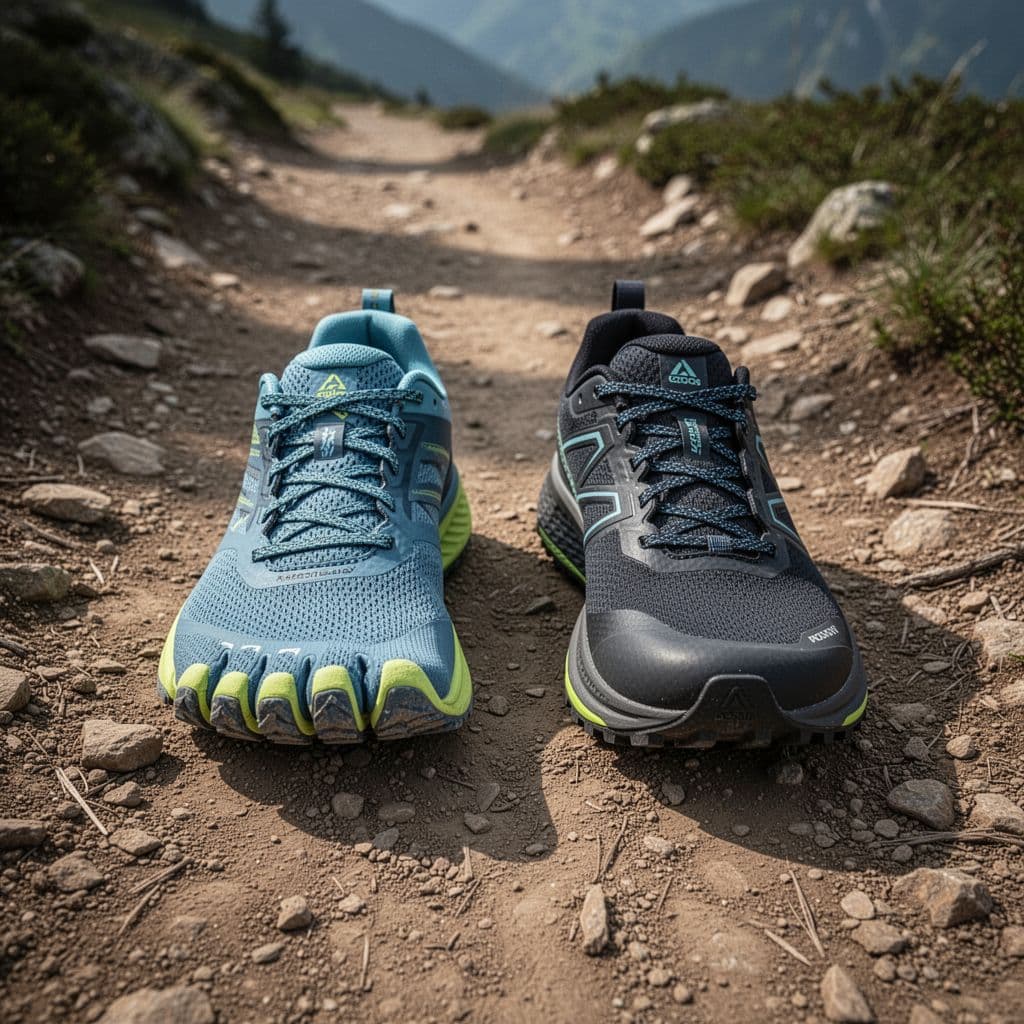
How the Topo Athletic MTN Racer 4 handles faster, rougher terrain
The MTN Racer 4 is built for a more locked-in trail feel. It gives runners more protection, better foothold, and a snugger fit that helps on uneven ground. That setup matters when the route turns rocky, steep, or technical, because the shoe feels more controlled when your footing starts to change.
This model aims to stay stable when the trail asks more from you. The structure helps on descents, the protection helps on sharp rock, and the fit helps keep your foot secure when the pace picks up. It is a stronger match for runners who want one shoe that can handle rough climbs and faster efforts without feeling loose.
If you like the idea of moving with a bit more precision on technical dirt, the MTN Racer 4 makes sense. It is less about casual comfort and more about keeping your foot planted when the terrain gets messy. That performance-first feel puts it in the same conversation as other technical trail shoes, including options like the Brooks Catamount 4 review.
The MTN Racer 4 also appeals to runners who want more security than a softer, roomier shoe usually provides. If your trails include loose gravel, exposed roots, and off-camber turns, that extra hold can make the run feel calmer and more controlled. On rough days, that kind of confidence is hard to ignore.
Fit and sizing differences that can change your decision
Fit is where the Altra Lone Peak 9 vs Topo Athletic MTN Racer 4 debate gets personal. Two runners can like the same trail and still need different shoes, because foot shape, toe room, and lockdown all change how a shoe feels after an hour or two.
The Lone Peak 9 leans toward a roomier, more natural fit. The MTN Racer 4 feels more shaped and secure, which can matter a lot when you want the shoe to stay quiet on your foot instead of moving with it.
Toe box space and toe splay: roomy comfort versus a more precise feel
Toe room changes more than comfort. It affects balance on descents, how your feet feel on hot days, and whether your toes still have space after several miles. A foot that can spread out usually feels calmer when the trail gets steep or your feet start to swell.
The Lone Peak 9 usually gives you more natural toe splay. That extra room helps if you dislike pressure on the pinky toe or big toe, and it can feel especially nice on long runs or hikes. The MTN Racer 4 keeps the forefoot more contained, so it feels more precise and controlled, even if it gives up a little spread.
That difference matters on downhills. When your toes slide forward, a roomier front end can reduce that cramped, jammed feeling. A more shaped fit can feel better if you want the shoe to guide your foot instead of letting it fan out.
If you want a deeper reference point on fit, Altra’s trail shoe fit guide gives a useful baseline for toe room and heel hold.
Midfoot and heel hold: which shoe feels more locked in
The midfoot and heel tell a different story. The MTN Racer 4 usually feels more secure through the middle and back of the shoe, which helps when you corner hard, climb steep ground, or move fast through broken terrain. That snugger feel can make rough trails feel less sloppy underfoot.
The Lone Peak 9 gives you more freedom, but that freedom can feel looser if you want a tightly wrapped fit. Runners with narrower heels or feet that slide around in softer shoes may prefer the MTN Racer 4 because it holds position better. Runners who dislike pressure across the instep or want less restriction often lean toward the Lone Peak 9.
Sizing comes into play here too. Many runners stay true to size in the Lone Peak 9 if they want the full roomier feel. Some choose a half-size up for long days, hot weather, or swelling feet. In the MTN Racer 4, true to size often works best when you want secure lockdown, while a half-size up can help if you need more front-end space without losing the snug midfoot.
If your toes need room more than your heel needs containment, the Lone Peak 9 usually makes more sense.
For runners comparing fit across brands, the simplest rule is this, match the shoe to your foot shape first, then adjust for race-day or long-run swelling. A wider forefoot, a lower-volume foot, or a narrow heel can all push the decision one way.
A quick fit check can help:
- Choose the Lone Peak 9 if you want toe spread, a natural feel, and less forefoot pressure.
- Choose the MTN Racer 4 if you want a more locked-in midfoot, tighter heel hold, and more control on technical terrain.
- Consider sizing up if your feet swell a lot, you run long, or you want extra room for descents.
- Stay true to size if you want the fit to feel precise and responsive from the start.
In short, the Lone Peak 9 favors space and freedom, while the MTN Racer 4 favors hold and precision. That single difference can decide which shoe feels right before you even hit the trail.
Cushioning, ride, and underfoot protection compared
Cushioning changes how a trail shoe feels after the first hour, and it matters even more when the miles pile up. In the Altra Lone Peak 9 vs Topo Athletic MTN Racer 4 matchup, the difference is not just softness. It also affects how much trail feedback you feel, how tired your legs get, and how much confidence you have on sharp, uneven ground.
A good trail shoe has to do two jobs at once. It needs to soften impact, but it also has to keep you connected enough to trust your footing. That balance is where these two models separate.
Which shoe feels softer and more forgiving over long distances
The Lone Peak 9 leans toward a more forgiving ride. It feels easier on tired legs, especially when you are stacking up back-to-back runs or spending hours on your feet. The midsole gives you a bit more cushion between your foot and the trail, so rough miles feel less harsh.
That softer feel can help cut down on fatigue when the route stays steady and you want comfort to carry you. It also works well for runners who like a relaxed landing and a shoe that takes the edge off long descents. If you are moving through an ultra-style effort, that extra comfort can make the difference between feeling beat up and feeling ready to keep going.
The MTN Racer 4 feels a little firmer and more controlled. It still gives protection, but the ride is more direct, so you feel the ground sooner. That can be a plus if you want a stable platform that stays composed on rocky climbs and tricky footing.
According to REI’s trail-running shoe guide, cushion and softness are not always the same thing, and that fits this comparison well. The Lone Peak 9 is the shoe for runners who want a softer landing, while the MTN Racer 4 is better for runners who prefer a steadier, more responsive feel under load.
How much trail feel and ground feedback each shoe gives
Trail feel is about how much of the terrain gets through to your foot. Some runners want that connection because it helps them react faster on roots, rocks, and off-camber ground. Others want more buffer, so the trail feels smoother and less punishing.
The Lone Peak 9 gives you enough feedback to stay aware of the trail, but it keeps the ride on the cushioned side. You still sense uneven ground, yet the shoe softens a lot of the sting from sharp edges and long, repetitive impact. That makes it a strong choice if you want protection without feeling completely cut off from the terrain.
The MTN Racer 4 gives more immediate ground feedback. You feel the trail a bit more clearly, which can help on technical routes where precise foot placement matters. At the same time, its underfoot protection does a good job of blocking harsh rock strikes, so the shoe never feels bare or overly thin.
For runners who like a more direct connection, that can be a real advantage. If you prefer to feel every change in the trail, the MTN Racer 4 keeps things honest. If you want more buffer and less punishment, the Lone Peak 9 will likely feel kinder over time.
A simple way to think about it is this:
- Choose the Lone Peak 9 if you want more softness, less leg fatigue, and a smoother ride on long outings.
- Choose the MTN Racer 4 if you want firmer stability, better trail awareness, and a more controlled feel on technical ground.
If you like shoes that stay light on the trail but still keep you connected, a model like the Nike Terra Kiger 10 review gives another useful reference point. The MTN Racer 4 sits closer to that responsive side, while the Lone Peak 9 keeps comfort front and center.
In short, the Lone Peak 9 is the softer, more forgiving option, and the MTN Racer 4 is the shoe for runners who want a firmer, more precise ride with solid protection beneath the foot.
Traction, grip, and confidence on different surfaces
Traction changes everything on trail. A shoe can feel fine on smooth dirt, then start sliding the moment the route turns steep, loose, or wet. In the Altra Lone Peak 9 vs Topo Athletic MTN Racer 4 comparison, the outsole design tells you a lot about where each shoe feels calm and where it asks for more care.
The Lone Peak 9 leans toward steady, everyday grip. The MTN Racer 4 feels more planted when the surface gets rough, broken, or unpredictable. That difference shows up on climbs, descents, and everything in between.
Where the Lone Peak 9 does best on trail grip
The Lone Peak 9 handles everyday trails well. On dry hardpack, packed dirt, and moderate singletrack, its outsole gives reliable contact without feeling harsh or overly aggressive. That makes it a strong match for runners who want a smooth, flexible ride with enough bite to stay confident on normal trail days.
Its lug pattern suits routes that ask for natural movement more than brute force. On rolling trails, mild grades, and mixed surfaces, the shoe feels easy to place and easy to trust. The grip is solid, but it does not feel like a claw digging into everything in sight.
That matters if you run trails that change shape without getting extreme. The Lone Peak 9 feels best when the ground stays mostly cooperative, and it pairs well with the shoe’s roomy, natural fit. For runners who care more about comfort and foot freedom than aggressive traction, that balance works.
The outsole is less suited to very steep or technical conditions than the MTN Racer 4. It can still get the job done, but it is not the shoe I would pick first for loose rock, sharp switchbacks, or constant braking on rough descents. On less aggressive terrain, though, it feels calm and predictable.
The Lone Peak 9 gives you dependable grip for normal trail use, not a hard-edged bite for the sketchiest terrain.
Where the MTN Racer 4 earns an edge in rough terrain
The MTN Racer 4 earns its advantage when the trail gets demanding. Steep climbs, rocky switchbacks, loose descents, and off-camber turns all benefit from a more secure platform, and this shoe feels built for that kind of work. It gives you more confidence when conditions change fast under your feet.
Deeper lugs and a more assertive outsole pattern help the shoe hold better on loose dirt and broken rock. On climbs, that extra bite can reduce slipping when you push off hard. On descents, it helps the shoe settle into the ground instead of skating across it.
Wet rock is still wet rock, so no trail shoe turns it into pavement. Even so, a firmer, more controlled platform can make those moments feel less stressful. If your local trails include roots, shale, gravel, and surprise mud patches, the MTN Racer 4 gives you a better sense of control. A shoe built for rougher routes, like models often highlighted in top trail running shoe roundups, usually follows this same logic, more secure footing when the trail gets messy.
The outsole also helps when you need to react quickly. If your foot lands slightly off line, a more secure grip can keep the shoe from wandering as much. That kind of stability is useful when the trail feels like a series of small decisions instead of one smooth run.
For mixed conditions, the Lone Peak 9 feels easier and more relaxed. For more technical terrain, the MTN Racer 4 has the edge because it stays more composed when the surface gets loose, steep, or uneven.
Stability, protection, and how each shoe handles fatigue
When the trail gets rough, stability starts to matter more than pure cushion. Late in a run, tired feet lose form, ankles roll easier, and sloppy landings happen faster. That is where the Altra Lone Peak 9 vs Topo Athletic MTN Racer 4 comparison gets sharper, because each shoe supports your foot in a different way.
The Lone Peak 9 gives you stability through its natural shape and roomier platform. The MTN Racer 4 feels more guided, with a more secure hold and a platform that helps keep your foot centered when the ground turns uneven. One feels freer, the other feels more controlled.
Which shoe feels more stable when the trail gets messy
The Lone Peak 9 feels stable in a natural way. Its wider toe box and flatter, zero-drop shape help your foot spread out, which can feel reassuring on off-camber ground. If you like a shoe that lets your foot do more of the work, this one feels calm and easy to trust.
The MTN Racer 4 feels more protective and more guided. It holds the heel and midfoot tighter, so your foot moves less inside the shoe when the trail becomes rocky or broken. That extra structure can help when your legs are tired and your foot placement starts getting sloppy.
On roots, loose stones, and side-hill traverses, the difference is clear. The Lone Peak 9 gives you natural stability, while the MTN Racer 4 gives you a more locked-in, protective feel. If ankle worries are part of your trail routine, the Topo model usually feels more reassuring because it keeps your foot centered better when balance gets tested.
Stability is not just about firm foam. Fit, platform shape, and how the upper holds your foot all matter.
For runners who want a similar secure feel in another trail option, the HOKA Speedgoat 7 stability and fit review is a helpful comparison point. It shows how much control can come from the upper and platform, not just the midsole.
Protection from rocks and sharp trail debris
Protection is where long mountain days can wear you down if a shoe comes up short. The Lone Peak 9 gives you enough underfoot defense for most trail use, but it keeps the ride lighter and more flexible. That works fine on moderate terrain, yet you will still feel sharp edges more than you would in a more guarded shoe.
The MTN Racer 4 feels better suited to rocky routes, rugged hikes, and long days on uneven ground. It has the kind of structure that helps block harsh rock strikes and take some of the sting out of repeated impacts. If you spend time on sharp scree, broken limestone, or trails with constant debris, that extra buffer matters.
Runners who care most about protection are usually the ones logging real miles on tough ground. That includes mountain runners, hikers who move fast, and anyone who ends up on technical trails week after week. The shoe that saves your feet at mile 12 often saves your form too, because you waste less energy guarding against every pointy rock.
If you want broader context on how support affects tired legs, Runner’s World on stability shoes gives a useful look at why some runners feel better with more structure underfoot.
The simple takeaway is this:
- Choose the Lone Peak 9 if you want a stable, natural platform and less interference from the shoe.
- Choose the MTN Racer 4 if you want more side support, more rock protection, and a safer feel when fatigue sets in.
- Go with the Topo if your trails are technical and your feet get beat up easily.
- Go with the Altra if you want protection, but still value freedom and ground feel.
Late in the run, the MTN Racer 4 is the one more likely to help keep your form tidy. The Lone Peak 9 is the one more likely to stay comfortable while you keep moving.
Durability, upper materials, and real-world wear
Durability matters when a trail shoe starts seeing brush, loose rock, mud, and repeat abuse week after week. In the Altra Lone Peak 9 vs Topo Athletic MTN Racer 4 matchup, both shoes can handle trail use, but they age a little differently. One feels a bit more open and forgiving, while the other leans more toward protection and structure.
Upper durability and trail abrasion
The MTN Racer 4 is the safer bet if your trails are rough on uppers. Its more structured build and stronger overlays give it a better shot at shrugging off scuffs from brush, rocks, and repeated toe strikes. If you run in tight singletrack or rocky terrain often, that extra armor can slow down the early signs of wear.
The Lone Peak 9 trades some of that toughness for a lighter, more flexible feel. That can make it more comfortable on long days, but it may also show abrasion sooner, especially around the toe box and side panels. The upper feels friendlier on the foot, yet that softer feel can come with a little less resistance to constant trail contact.
If your runs include a lot of scraping against brush or stone, the Topo usually keeps its shape and looks cleaner for longer.
Breathability also plays a role. A more open upper can feel great in heat, but it may pick up grime and wear marks faster. A more protected upper can run a little sturdier, though it may feel less airy on hot summer miles. According to REI’s trail-running shoe guide, lighter uppers tend to favor comfort and airflow, while tougher builds usually put more emphasis on protection.
For runners who want a shoe that still looks decent after repeated use, the MTN Racer 4 has the edge. The Lone Peak 9 is easier to wear straight out of the box, but it may show its miles sooner.
Outsole wear and long-term value
Outsole life changes the value story fast. A shoe that costs less upfront can become the pricier choice if the tread rounds off early, especially for runners who log high mileage on dirt, rock, and pavement connectors. The real question is how long the shoe stays useful, not just how much it costs on day one.
The MTN Racer 4 usually looks like the better long-term play if you want mileage out of the outsole. Its grip-focused design is built for tougher terrain, and that often translates to better hold up when you keep putting the shoe through technical trails. The Lone Peak 9 can still last a solid stretch, but its outsole is more about balanced comfort than aggressive wear resistance.
A simple value lens helps here:
- Choose the Lone Peak 9 if you want more comfort per mile and a softer ride.
- Choose the MTN Racer 4 if you want stronger upper protection and better odds of cleaner-looking wear over time.
- Think beyond sticker price, because a shoe that lasts longer on rough trails often gives you better value.
The outsole also affects how the shoe feels after months of use. As lugs wear down, grip fades on loose dirt and wet ground first. That means a shoe can still look fine while losing some bite, so trail runners who log big miles should watch tread wear as closely as upper damage.
For runners comparing how long a shoe holds up in real use, Brooks Cascadia 19 durability and mileage gives a helpful benchmark for what long-lasting trail wear can look like in practice. If you want the shoe that feels more ready for repeated abuse, the MTN Racer 4 has the stronger durability case. If you want a softer, roomier ride and can accept a little more visible wear, the Lone Peak 9 still makes sense.
Who should buy the Lone Peak 9, and who should choose the MTN Racer 4
The choice gets simple once you match the shoe to your trail style. The Altra Lone Peak 9 vs Topo Athletic MTN Racer 4 comparison is really about comfort and freedom on one side, and control and protection on the other.
If you want a shoe that feels easy, roomy, and relaxed over long miles, the Lone Peak 9 fits that job well. If you want a shoe that feels more planted on steep, rocky, or uneven ground, the MTN Racer 4 makes more sense. The best pick depends on how much space your foot wants, how technical your trails are, and how much security you want when the terrain turns rough.
Choose the Altra Lone Peak 9 if you want natural comfort and toe room
The Lone Peak 9 is the better pick if you like a zero-drop feel, a wide forefoot, and a shoe that lets your toes spread out. Runners with wider feet, flatter feet, or anyone who hates a tight front end usually feel at home here. It gives you room to move without feeling clumsy.
This shoe also works well for hikers who want one pair for both trail running and hiking. The ride feels comfortable on long, steady days, so it suits mellow singletrack, fire roads, long hikes, and mixed-effort outings where comfort matters more than speed. If your feet swell late in a run, that extra space can feel like a relief instead of a compromise.
The Lone Peak 9 is a smart choice if you care more about all-day comfort than a tightly guided fit. It lets the shoe disappear a bit, which many runners love on easy miles and longer routes. For runners who want another look at trail shoes built for hiking-friendly use, REI’s trail-running shoe guide gives a useful baseline for fit and terrain matching.
Choose the Topo Athletic MTN Racer 4 if you want more control on technical trails
The MTN Racer 4 is the better choice if you run on rough, technical, or steep terrain and want more hold underfoot. It feels more secure through the heel and midfoot, so your foot stays centered when the trail gets loose or uneven. That can make a big difference when you are moving fast or descending on tired legs.
This shoe fits runners who want protection and confidence on rocky trails, mountain routes, and broken terrain. It is also a better match if you like a more precise fit and want less movement inside the shoe. When footing gets messy, that snugger feel helps the shoe stay calm and controlled.
If you care about stability on difficult ground, the MTN Racer 4 is the more focused tool. It is the better option for technical trail runners, mountain runners, and anyone who wants more security on rough ground without giving up trail-friendly cushioning. For runners comparing other rugged options, trail shoe buying advice from REI can also help frame what matters most on demanding routes.
Quick decision guide for faster picking
If you still feel torn, use this short check:
- Choose the Lone Peak 9 if you want zero-drop comfort, a wide toe box, and a relaxed ride.
- Choose the Lone Peak 9 if you hike as much as you run.
- Choose the MTN Racer 4 if you want a more secure fit through the heel and midfoot.
- Choose the MTN Racer 4 if your trails are rocky, steep, or highly technical.
- Choose the MTN Racer 4 if protection and confidence matter more than extra toe room.
The simplest way to decide is this: pick the Lone Peak 9 for comfort and freedom, or pick the MTN Racer 4 for control and security.
Conclusion
The Altra Lone Peak 9 vs Topo Athletic MTN Racer 4 choice comes down to feel. The Lone Peak 9 is the better pick if you want a roomier, more natural ride with plenty of toe space.
The MTN Racer 4 is the better choice if you want a more locked-in shoe with extra protection for technical trails. If you keep your foot shape, trail type, and comfort needs in mind, the right pick gets much easier.


