

Adidas Ultra Boost 5 Review: Comfort or Hype?
Have you been seeking an Adidas ultra boost 5 review? Welcome to RunDreamAchieve. You’ll get a full breakdown of the Adidas Ultraboost 5 in this review. We cover comfort, fit, ride, durability, and whether it’s worth the $180 price tag. Plus, you will see real test results from runs and daily wear.
This shoe shines as a daily trainer. It focuses on plush cushioning for easy miles and all-day comfort, not speedwork or races. So, if you want a reliable go-to for recovery runs or casual strides, it fits right in.
Adidas made big changes here. The new Light Boost foam weighs less than classic Boost, yet it returns more energy (up to 70% at the forefoot). In addition, Continental rubber on the outsole grips well and lasts longer.
First impressions count, and this one delivers a soft step-in feel. The Primeknit upper hugs securely without hot spots. However, at 10.3 ounces, it is not the lightest option out there.
Build Your Complete Race-Day Setup
The right shoe helps, but faster racing comes from better training, pacing, recovery, fueling, and execution.
More Guides for This Shoe
Stick around. You will learn how it stacks up against older models and rivals like the Brooks Glycerin. Most importantly, we answer if it suits your routine.
Adidas Ultra Boost 5 Review
Adidas kept the Ultraboost 5 true to its roots as a plush daily trainer at $180. It weighs 10.3 ounces in a men’s US size 9 with a 10 mm drop, so everyday runners get reliable cushion without bulk overload. Released late 2025 into early 2026, it’s widely available now in February 2026 across colors and sizes.
Those specs mean smooth strides on recovery runs or walks, yet it stays stable for heel strikers. In short, core comfort endures, but upgrades fix old pains like heavy foam.
Light Boost foam, softer feel without the old heavy Boost problem
Light Boost drops the weight of original Boost foam while packing in more cushion and bounce. It returns up to 70% energy at the forefoot and 66% in the heel, so each step feels lively yet soft. You notice this most on easy runs or long walks; the extra 9 mm stack height absorbs impacts without tiring your legs.
However, it is not ideal for speed sessions because the shoe tips the scale at 10.3 ounces overall. Runners praise the medium-firm bounce (around 38 durometer), but forefoot strikers might want thicker padding there. As a result, pick it for daily miles where plushness rules.
Primeknit upper updates: breathability, lockdown, and potential hot spots
New yarn makes the Primeknit thinner with tiny ventilation holes for better airflow. Your foot stays cool during moderate efforts, and the wrap secures the midfoot for even strides. Besides that, the padded heel collar prevents rubbing when the fit matches your shape.
Watch for warmth buildup on hot summer long runs, though. Some users report heel slip if you have narrow heels, so try them on first. Overall, comfort shines because the upper molds like a sock, hugging without pressure points.
Continental rubber outsole and stability pieces that shape the ride
Continental rubber grips wet sidewalks or roads with confidence thanks to sipes and lugs. It holds up over miles, so you trust it on city paths or rainy days. Meanwhile, the wide 94 mm heel base keeps landings steady.
An X-shaped Torsion plate links forefoot to rearfoot smoothly. The molded external heel counter locks you in place. Therefore, transitions feel controlled, especially with the high 35-39 mm stack. Heel strikers love this setup for stable, plush rides without wobbles.
How the Ultraboost 5 feels on real runs: cushioning, bounce, and pace range
You want to know the real ride in this Adidas Ultraboost 5 review. We logged miles at easy paces, steady efforts, and quick pickups. The Light Boost foam delivers soft cushioning with controlled bounce. It absorbs shocks well, so legs stay fresh after everyday runs. However, at 10.3 ounces, it lacks snap for fast work. Still, it handles relaxed strides smoothly. Grip holds up in wet conditions too. Let’s break it down by pace and surface.
Easy runs and recovery days: where the Ultraboost 5 shines
Soft cushioning rules here. The Light Boost foam compresses gently underfoot, yet it stays controlled without mushiness. Your legs feel fresher because it soaks up impacts on those 5-7 mile recovery jogs. Runners keep grabbing it for daily filler miles; the plush stack height makes strides effortless.
Bounce adds smoothness. It returns about 70% energy up front, so relaxed paces flow naturally. Stability comes from the wide base, so you run confident without wobbles. In short, pick this shoe when comfort tops speed. It excels on park paths or neighborhood loops.
Picking up the pace: why it can feel heavy for speed work
Weight slows you down here. At 10.3 ounces, it drags during intervals or tempo runs. You feel it most when pushing past easy pace; the mass resists quick turnover. Therefore, it suits short strides or pickups, but skip it for race day or hard sessions.
Think of it as a comfort shoe, not a speed one. Lighter trainers like the Hoka Mach snap back faster. Bounce stays competent, yet unremarkable. Forefoot strikers notice less pop too. As a result, save the Ultraboost 5 for steady efforts where reliability beats excitement.
Grip and confidence in bad weather: wet roads, painted lines, and sidewalks
Continental rubber bites well on wet pavement. Sipes and lugs channel water away, so you grip yellow lines or slick sidewalks without slips. City runners trust it during light rain; traction feels solid on concrete or asphalt.
However, watch slick spots. Metal grates get extra slippery, so step wide. Tight turns on smooth tile demand caution too. Overall, the outsole lasts and inspires confidence. In addition, the stable base helps in puddles.
Fit and comfort checklist: sizing, wide feet, and all day wear
Fit sets the tone for every run and step in this Adidas Ultraboost 5 review. Most runners find it true to size, but details like toe space and heel lock make or break it. We break down sizing tips, wide foot options, and lifestyle comfort so you pick right.
Sizing advice in plain English: true to size, or size up?
Start with your true size. The Ultraboost 5 fits most people spot on, thanks to its roomy toe box and stretchy Primeknit upper. Runners with normal feet love how it hugs without squeezing.
However, check these signs before buying. Toes jam the front? Go half a size up. Heel lifts on strides? Size down or tighten laces. Midfoot pinches after a mile? You need more width there.
Test at home easily. Slide a thumb between your big toe and toe box end; one thumb’s width means perfect space for swelling. Then try lock lacing: cross laces high over midfoot and loop through top eyelets for secure hold. Walk around. No slip or rub? It fits.
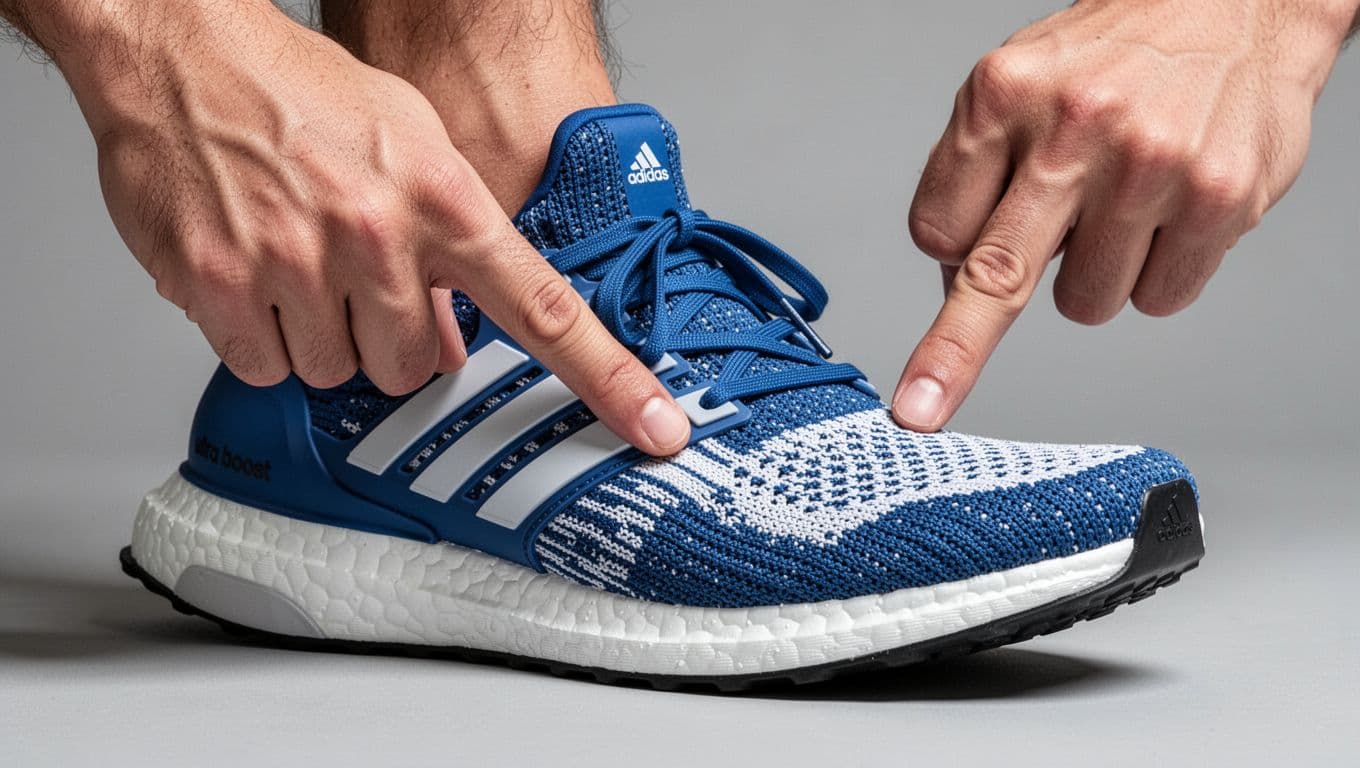
Narrow heels often face slip issues, so pad the tongue or use thicker socks. Wide mids might need that half up. In short, true size works for standard feet; adjust based on your test.
Is the Ultraboost 5 good for wide feet?
The Ultraboost 5 surprises with its generous fit. Its base spans 98.4 mm wide, above average, and the toe box hits 78.6 mm for toe splay. Primeknit stretches over time, so many wide-footed runners stick with true size.
Still, some call it narrow in the midfoot compared to max-width shoes. If your feet run extra broad, size up half for relief. Adidas offers no dedicated wide version yet, but the stretch often compensates.
Test before committing. Walk briskly; pressure points mean try another model like Brooks Ghost. Narrow heels pair well here, but super wide feet might prefer dedicated wides elsewhere. Overall, it suits moderate wide feet without hassle.
Comfort beyond running: walking, travel days, and standing at work
People grab the Ultraboost 5 for more than runs. Its 39 mm heel stack and Light Boost foam cushion long days on your feet. You forget it’s there during airport treks or office shifts.
Primeknit feels sock-like and molds fast, but it traps heat on warm days. Breath holes help, yet pair it with no-show socks for airflow. Grip and durability shine on varied surfaces, from pavement to carpet
At 10.2 ounces, it stays light for 12-hour wear. Heel strikers get stable support; others enjoy the plush rebound. Therefore, it excels as a daily driver, blending run comfort with lifestyle ease.
Durability and value: is the Ultraboost 5 worth the money in 2026?
You pay $180 for the Ultraboost 5, so durability matters in this Adidas Ultraboost 5 review. Testers log hundreds of miles and report strong outsoles and heel padding that hold up well. However, the knit upper snags easily, and foam softens over time. Heavy runners notice quicker compression too.
Still, it offers solid value for daily miles if you snag sales at $150 to $170. Plenty of colorways fit any style, and most retailers give 30 to 60 day returns. Therefore, it stacks up as a worthy buy for comfort seekers, but speed hounds look elsewhere.
What holds up over time: outsole wear, heel lining, and upper durability
Continental rubber shines on the outsole. It shows just a 0.8 mm dent after heavy abrasion tests, better than the average 1.1 mm. That thick 2.8 mm layer grips roads and lasts 300 plus miles with light wear under heel and forefoot.
Heel lining stays plush too. Padding resists compression, so it feels secure run after run. Testers praise this for stable landings without breakdown.
Yet, the Primeknit upper scores only 3 out of 5 in toughness. It snags on rough spots like branches or curbs. Foam softens with high mileage, especially for runners over 200 pounds. In short, outsole and heel outlast the knit and midsole, so expect 400 to 500 miles before major issues.
Ultraboost 5 vs Ultraboost Light and Ultraboost 5X: which one should you buy?
The Ultraboost 5 serves as your standard cushioned daily trainer. It balances plush Light Boost foam for easy miles. Ultraboost Light, the prior step, feels heavier with less energy return. Meanwhile, Ultraboost 5X runs lighter and more agile, yet it stiffens 34% in cold weather versus the 5’s 19%.
Check this quick comparison to pick right:
| Feature | Ultraboost 5 | Ultraboost Light | Ultraboost 5X |
|---|---|---|---|
| Weight | Balanced, plush feel | Heavier baseline | Lighter, agile |
| Ride | Smooth daily cushion | Good return, less refined | Stable, forward-focused |
| Cold Flex | Stiffens 19% (flexible) | Soft overall | Stiffens 34% (less ideal) |
| Durability | Outsole strong, upper fair | Average | Top outsole/upper (5/5 heel) |
Choose the 5 for max comfort on budget. Go 5X if you want durability and lightness, but test in cold first. Skip Light; it’s outdated.
Best alternatives if you want more speed, more softness, or a lower price
Sometimes the Ultraboost 5 does not fit your needs. Here are targeted swaps based on priorities.
For more speed, seek a snappier trainer. Look for lighter weight under 9 ounces, a plate for pop, and rocker geometry. These handle tempos better than the 5’s plush ride.
Need more softness? Pick a max cushion cruiser. Target 40 mm plus stacks with wide bases for pillow-like miles. They beat the 5 on long efforts without the weight drag.
On a lower price, grab a value daily trainer. Aim for reliable foam, good grip, and under $140 tags. These match daily comfort yet save cash for heavy use.
In addition, shop sales now. Adidas drops prices often, and returns stay easy. Therefore, weigh your runs against the $180 tag; the 5 wins for plush reliability.
Conclusion
The Adidas Ultraboost 5 nails it as a daily trainer for plush comfort and smooth rides on easy runs. In this Adidas Ultraboost 5 review, we saw top strengths like soft Light Boost foam, reliable Continental grip, stable landings, and solid outsole durability that lasts 400+ miles. However, the 10.3-ounce weight drags during speed efforts, the ride lacks excitement, fit narrows for some heels or super wide feet, and the $180 price demands sales hunting.
Buy it if:
- You log recovery miles or casual strides.
- Comfort tops your list for runs and all-day wear.
- Wet roads need sure grip without slips.
Skip it if:
- Speedwork or races call your name.
- You crave lightweight snap or max softness.
- Budget stays under $150 firm.
Back to Adidas Running Shoe Reviews


