

Adidas Terrex Agravic Speed Ultra Review
Have you been in search of an Adidas terrex agravic speed ultra review? If so, I am glad you have made it here to RunDreamAchieve. Trail racers and runners chasing PRs on runnable trails will love the Adidas Terrex Agravic Speed Ultra. This shoe delivers a light, bouncy “trail super shoe” feel that propels you forward on flowy paths. However, it is not for easy jogs, sloppy mud, or very rocky routes; those demand more protection and bite.
In this Adidas Terrex Agravic Speed Ultra review, we break down its standout traits. At just 9.1 ounces per shoe, it packs Lightstrike Pro foam and Energy Rods for responsive bounce over long ultras. Yet tradeoffs exist: grip works well on firmer ground with Continental rubber lugs, but minimal padding can feel harsh, and fit snugs some feet too tight.
You’ll get real-world tests on fit, ride, grip, durability, and value. We also cover who should buy it (midfoot strikers on smooth terrain) and who should skip. Stick around to see if it shaves minutes off your next race.
What the Agravic Speed Ultra is built to do (and what it is not)
You want a shoe that flies on race day, right? The Adidas Terrex Agravic Speed Ultra shines there. However, it skips plush comfort for pure speed. This speed-first design suits fast trail efforts, not casual hikes or sloppy conditions. At $220, it weighs about 9.5 ounces for men and 8.1 ounces for women, with a 38 mm forefoot to 30 mm heel stack and 8 mm drop. Those numbers matter because they shape how it feels mile after mile.
Quick specs that actually matter on the trail
That high stack delivers real cushion on longer runs. It absorbs chatter from roots and packed dirt, so your legs stay fresh past 50K. Yet the 8 mm drop eases calf strain during forward rolls, especially for midfoot strikers.
Weight counts most late in ultras. These tip scales at 9.3 to 9.7 ounces for men (size 9-10.5) and around 8.4 ounces for women (size 8). You forget they are on your feet until fatigue hits; then lightness saves energy.
Many runners note the Agravic Speed Ultra runs a tad long. Some size down a half size for a snug race fit. Always try them on first, because feet vary.
The “trail super shoe” idea in simple terms
Lightstrike Pro foam acts as the bouncy engine here. It snaps back fast after each step, much like a road super shoe but tuned for dirt. PEBA Energy Rods add stiffness; they store energy on toe-off and push you ahead without the harsh snap of carbon plates.
This combo excels on long climbs, where rods help maintain rhythm. Steady descents feel controlled because the foam compresses predictably. Fast cruising on smooth dirt? It propels strides effortlessly, cutting effort on flowy sections.
In short, it rewards quicker paces. At slower speeds, the rocker feels off; it pushes you to pick up tempo or step awkwardly.
Best terrain and pace for this shoe
Pick runnable singletrack first. Packed dirt paths let the rocker shine, keeping turnover quick. Hardpack trails suit it too; low-profile lugs roll smoothly without drag.
Moderate rocks work if you hold rhythm. The wide base adds stability, so you trust it on rolling descents.
However, it falters on loose scree; shallow lugs skate instead of bite. Very technical rock gardens demand more protection, as the thin upper exposes feet. Deep mud clogs the outsole fast, killing bounce. Skip slow hiking paces too; the stiff ride punishes shuffles.
Stick to firm, flowing terrain at race effort. There, this shoe in our Adidas Terrex Agravic Speed Ultra review truly excels.
Fit and comfort: what your feet will notice in the first mile
Your feet pick up on fit right away in the Adidas Terrex Agravic Speed Ultra. That first mile reveals a roomy toe box paired with a narrower heel, which suits some runners perfectly but pinches others. Because feet swell during ultras and shapes differ, test this shoe before race day. In our Adidas Terrex Agravic Speed Ultra review, we focus on what real runners feel upfront, plus fixes to dial it in.
Sizing and shape: length, toe box space, and heel narrowness
Many runners find the Agravic Speed Ultra runs a bit long. You might notice extra space at the end of the first mile, especially if you prefer a locked-in race fit. Size down a half size if your feet stay consistent and you lack a wide forefoot; that snugness boosts control on fast sections.
However, stick to true size if you have broader toes or expect swelling on long efforts. The toe box offers ample room, so toes splay naturally without squeeze. Wide-footed runners love this; it prevents blisters over 50K. In contrast, the heel cups feel narrow. Slim heels settle in fine, but thicker ones get pressure points or rubs early on. Some report an unstable wobble on turns because the hold lacks padding. Test by standing on one foot; if it shifts, consider thicker socks first.
Overall, this shape works best for narrow-to-medium heels with wider fronts. Your foot type decides if it feels secure or sloppy from the start.
Lockdown and lacing tricks for fast downhills
Heel slip kills confidence on steep drops, so check it at home. Walk backward on stairs in the shoes; any lift means adjust now. Simple tweaks make a big difference without fancy gear.
Start with heel lock lacing. Thread the lace ends up the last eyelets, then loop them horizontally across the top ones before tying. Pull firm; this creates a secure cradle around your ankle. Next, snug the midfoot bands tighter than the toe area. That prevents lift while keeping toes free.
Sock choice helps too. Go for mid-cushion ones with a snug heel tab; they fill gaps and cut rub. Thinner race socks work if lockdown feels solid already. These steps transformed downhills for testers, adding stability without bulk
Breathability and wet conditions
The thin mesh upper shines for airflow from mile one. Air rushes through easily, so feet stay cool on warm climbs. It also dries fast after creek crossings; water sheds in minutes, unlike thicker trainers.
Yet it feels less plush than daily shoes. No extra padding means you sense ground chatter more directly. Still, breathability trumps that for races. Debris sneaks in via the open heel sometimes, especially on dusty trails. Low gaiters block sand effectively; pair them for dry, gritty ultras. Wet runs handle fine overall, but skip if you crave max protection.
Ride and performance: how it feels when you push the pace
Push the Adidas Terrex Agravic Speed Ultra into race mode, and it comes alive. At steady efforts on smooth trails, the ride feels bouncy and quick, almost like a road super shoe adapted for dirt. However, shuffle slowly, and it fights you; the stiff rocker demands efficiency or feels clumsy. In this Adidas Terrex Agravic Speed Ultra review, we unpack that sensation across paces, from easy jogs to all-out pushes.
Cushioning and bounce from Lightstrike Pro
Lightstrike Pro foam gives a soft landing that suits long miles. Yet it tunes mainly for speed; the bounce snaps back fast, with strong energy return around 67 percent in the heel and 71 percent up front. Runners often say it helps hold pace with less effort on flowy sections.
For example, at race tempo, each step rebounds eagerly, keeping legs fresh past 50K. The foam measures soft at 35 durometer, so it compresses smoothly over roots without bottoming out. Still, some testers notice no huge boost; it just feels consistent rather than magical.
In short, this cushion rewards quick turnover. Slow down, and the spring feels muted, almost wasteful.
Energy Rods: forward pop without feeling like a plank
PEBA Energy Rods add targeted stiffness right where you need it. Four rods in the forefoot store energy on landing, then release a forward pop at toe-off. They shine on climbs too; the structure aids your roll without forcing an unnatural gait.
Because they flex like fingers instead of a rigid plate, the shoe stays adaptable. You get propulsion at low six-minute miles, making strides feel effortless. However, at easy paces, they make slow running awkward; the push disrupts shuffles.
Check yourself: if plated road shoes suit you, these will click. Crave a flexible trail shoe? Skip it, because the rods demand rhythm.
Stability and confidence on uneven trails
This tall shoe surprises with solid stability on smoother paths. A wide base and 4-out-of-5 torsional rigidity keep it planted during moderate rolls. Energy rods spread out front, so descents feel controlled for a high-stack design.
Runners trust it on packed dirt or gentle roots. The secure heel lockdown helps; you lean into turns without much wobble. Yet limits hit fast on off-camber rocks, loose gravel, or quick direction changes. There, the stack height rocks side to side.
A narrow heel worsens it for some; thicker ankles amplify slips. Overall, it holds up well in its speed category, but stay realistic on rough stuff.
Long runs and race-day fatigue: calves, feet, and form
Long ultras test this shoe’s limits. At steady race pace, fatigue stays low; the bounce protects legs without packing down over 100 miles. However, slow sections or form breakdowns spark calf soreness, like driving a sports car in traffic.
Midfoot strikers fare best; heel strikers strain more from the rocker. Feet hold up fine thanks to resilient foam, but exposed uppers let chatter through on rocks. Therefore, ease in with faster workouts first.
Don’t debut it on a full-day mountain slog. Pair it instead with firm, flowing terrain it handles best. That way, you tap its strengths and dodge the pitfalls.
Traction and durability: Continental rubber, lug depth, and real trail grip
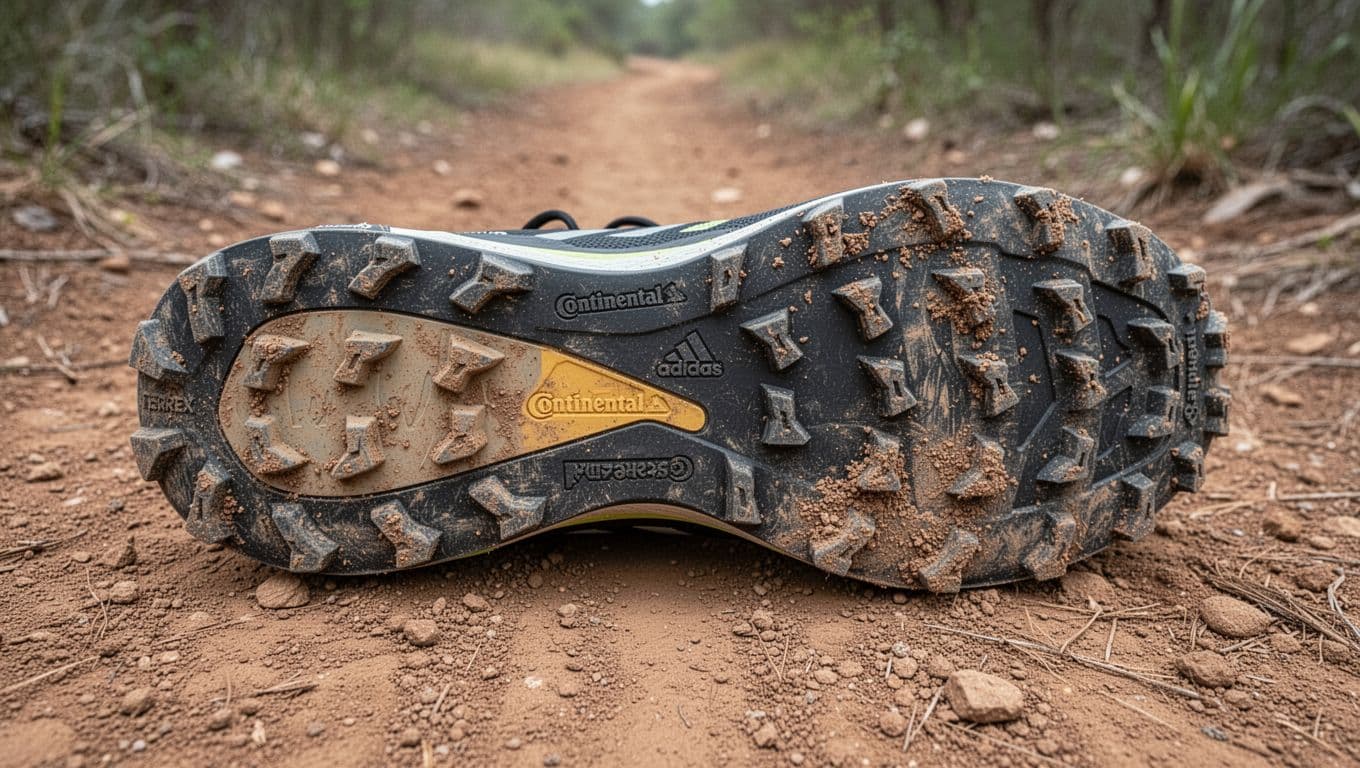
The Adidas Terrex Agravic Speed Ultra relies on Continental rubber for grip, paired with shallow lugs at 2.5 mm in the center and 3 mm on the edges. This setup bites well into firm ground, so you can push hard without second-guessing your footing.
However, those depths limit it in softer stuff; even top rubber slips if lugs can’t dig deep enough. In this Adidas Terrex Agravic Speed Ultra review, we break down real trail performance to help you predict how it holds up on your routes.
Grip on hardpack, rock, and dry dirt
Packed trails let this shoe shine bright. The Continental compound sticks like glue to hardpack, so you maintain speed without drama. Rock slabs feel secure too; edge lugs at 3 mm grab edges during leans, especially when you hit them fast.
For example, testers flew over dry dirt sections in our Adidas Terrex Agravic Speed Ultra review. The center lugs roll smooth at 2.5 mm, cutting drag on straights. However, a thin loose layer atop hard ground changes things. Good rubber helps, but shallow lugs skate if dirt shifts underfoot. You notice it most mid-race, when fatigue dulls reactions.
In short, pick this for flowy, firm routes. There, traction builds confidence for PR chases.
Where traction falls short: loose, muddy, and very technical terrain
Loose stuff exposes the limits fast. Wet leaves pack the lugs and slide right off hard ground underneath. Pea gravel over roots acts the same; those 2.5 mm centers float instead of bite, so turns get sketchy.
Mud pockets clog everything. Deeper than 3 mm, and the outsole balls up, killing forward drive. Steep loose descents prove worst; gravel sprays out, leaving you braking hard. Reviewers call it skittish there, unlike deeper-lugged rivals.
Workarounds help, though. Choose packed routes when possible. Slow turns on sketchy spots to let edges catch. If mud or gravel dominates your trails, grab a shoe with 4 mm plus lugs instead. That way, you match gear to ground.
How long it lasts and what tends to wear first
Continental rubber holds up strong for a race shoe. Expect 200 to 300 miles before major slip sets in, based on firm-trail use. Midfoot lugs smooth first from constant flex; they drop to 1.5 mm after 100 miles, but edges stay sharp for corners.
The thin upper endures too. It resists tears on rocks, yet feels less shielded over time as mesh thins. After 50 miles, watch for midsole packing in high-wear spots; it softens bounce slightly.
Normal wear looks even here. No huge chunks gone, just gradual tread loss. Clean with a soft brush after runs, then air dry away from heat. Skip the dryer; it cracks rubber. Store flat to keep shape.
Simple care extends life, so it stays race-ready longer.
Should you buy it: best use cases, top alternatives, and the Speed Ultra 2 question
Deciding on the Adidas Terrex Agravic Speed Ultra comes down to your trails and style. This shoe fits racers who chase speed on smooth paths, as our Adidas Terrex Agravic Speed Ultra review shows. However, it skips versatility for pure pace. Let’s break it into clear profiles, so you know if it matches your runs.
Buy it if you want a fast trail race shoe for runnable courses
You will love this shoe if efficiency drives your races. Forefoot and midfoot strikers get the most from its rocker and rods. Here is who thrives in it:
- Efficient midfoot runners on 50K to 100-mile ultras feel the bounce save energy over hours.
- Forefoot strikers targeting sub-7 minute trail miles enjoy the quick snap on packed dirt.
- Racers on flowy singletrack with minimal rocks keep steady rhythm without drag from lugs.
- Hardpack lovers at marathon distances push PRs, because the light weight fades late.
- Dry course chasers hold pace on rolling terrain, where Continental rubber locks in.
In short, grab it for firm, fast events. Your legs thank you at the finish.
Skip it if your trails are steep, sloppy, or very rocky
Some runners face clear red flags with this shoe. Narrow heels rub after 10 miles for many. So, pass if these hit home.
First, heel discomfort hits thicker ankles hard; pressure builds on descents, causing blisters. Second, slow cruisers hate the stiff ride; it punishes shuffles below 8-minute pace. Third, deep lugs matter in mud or loose gravel; these shallow ones clog and skate. Finally, technical rocks demand plates and padding; the thin upper lets chatter bruise feet.
Heel strikers or hikers also struggle. The rocker fights casual paces. Stick to daily trainers instead. You avoid frustration that way.
Agravic Speed Ultra vs Agravic Speed Ultra 2: which one makes more sense now
The original suits dry, fast hardpack races best. It rolls smooth at 9.1 ounces with shallow 2.5-3 mm lugs. However, the Speed Ultra 2 steps up for most runners now.
That newer model adds deeper, sharper 4 mm lugs for varied trails. Grip improves on gravel and light mud, plus a softer collar cuts heel rubs. Weight creeps to 9.35 ounces, but plush Lightstrike Pro boosts comfort over long hauls. Fit feels truer too, with better lockdown for midfoot strikers.
Rule of thumb: Pick the original on sale for pure hardpack speed. Choose the 2 at $220-250 for everyday races with mixed ground. Runners prefer its fixes in 2026 reviews.
Alternatives to consider (based on what you want more of)
Need tweaks from this racer? Here are targeted picks, short and simple.
More grip on varied trails: Adidas Terrex Agravic TT offers longer midfoot lugs to tame roots and rocks at $200. La Sportiva Prodigio Pro grips anything with deep pattern for $190; less picky overall.
More comfort for daily training: Adidas Terrex Agravic 4 cushions everyday hauls at $160 without race stiffness. On Cloudultra Pro stays plush and stable for $180, perfect for volume weeks.
More protection for technical mountains: Salomon S/Lab Ultra 3 adds a rock plate and tough grip at $200 to shield feet on gnarly stuff.
Lower price: Nike Terra Kiger 9 races light under $150 with solid lugs. Saucony Peregrine 14 gives value at $140 for daily speed.
These fill gaps based on your needs. Match your trails, and you run happier.
Conclusion
The Adidas Terrex Agravic Speed Ultra review shows a specialized trail racer that bounces and propels you on smooth, firm paths. However, its narrow heel fit pinches some runners, and shallow lugs slip in mud or loose gravel. Therefore, it excels for midfoot strikers chasing PRs on flowy singletrack ultras, but skips versatility for technical or sloppy terrain.
In short, this lightweight speed machine saves energy over long races when conditions match. Yet the Speed Ultra 2 offers better grip and comfort for most now.
Back to Adidas Running Shoe Reviews


