

600m Split Calculator Guide
So, you’re looking to nail that 600m split? It’s a tricky distance, not quite a sprint, not quite a middle-distance race. Getting the pacing right can make all the difference. That’s where a good 600m split calculator comes in handy. Think of it as your personal pace-setting coach, helping you figure out just how fast you need to run each segment to hit your goal. We’ll walk through how to use one, what makes a good one, and how to make it work for your training.
Key Takeaways
- A 600m split calculator helps you figure out your target pace for each part of the race, making it easier to train effectively.
- You’ll need to input your goal time and the race distance to get started with the calculator.
- These calculators can adjust for different race scenarios, which is pretty neat.
- Using historical data or even heart rate can make your pace predictions more accurate.
- Don’t forget that mental prep and proper tapering are just as important as the numbers from your 600m split calculator.
Understanding Your 600m Split Calculator Needs
So, you’re looking to nail that 600-meter race, huh? It’s a distance that really demands a solid understanding of your pace. You can’t just go out there and wing it; you need a plan. That’s where a good 600m split calculator comes into play. It’s not just about knowing how fast you need to run each lap, but also about understanding what that pace feels like and how to train for it.
Defining Your Target 600m Pace
First things first, what’s your goal? Are you aiming for a specific time, or are you just trying to run faster than last time? Knowing your target pace is the starting point for everything. You can use online tools to figure out what pace per lap, or per 100 meters, you need to hit. For example, if you want to run a 1:30 600m, that’s 15 seconds per 100m. Simple enough, right? But then you have to actually run that pace. It’s one thing to see it on paper, another to feel it in your legs.
- Calculate your goal time: Decide on a realistic target for your 600m race.
- Break it down: Determine the required pace per 100 meters or per lap.
- Visualize the effort: Imagine what running at that pace feels like.
Leveraging Pace Calculators for Training
Once you know your target pace, a calculator becomes your training buddy. It helps you translate that target time into actionable training sessions. You can plug in your goal and see what kind of splits you should be aiming for during interval workouts. This is super helpful for designing workouts that actually prepare you for the race. You don’t want to be doing intervals that are way too slow or way too fast; you need them to be just right. A good pace calculator can help you find that sweet spot. It’s like having a coach in your pocket, telling you exactly what to do. You can find a basic pace calculator here that can get you started.
Build Your Running Performance System
Move from research to action with training, recovery, nutrition, pacing, and performance tools built for runners.
More Guides for This Runner Goal
Interpreting 600m Split Calculator Outputs
Okay, so you’ve put in your numbers and got some results. Now what? The output might show you your target pace per 100m, but it might also give you splits for different distances, like 200m or 400m. This is where you start to build a picture of the race. You can see how you should be feeling at different points. For instance, the first 200m might be controlled, the next 200m a bit faster, and the last 200m all-out. Understanding these intermediate targets helps you manage your effort during the race. It’s not just about the finish line; it’s about executing each segment properly.
The numbers on the calculator are just a guide. They give you a framework, but your body’s feedback is just as important. Learn to listen to what your legs and lungs are telling you during training and on race day.
Here’s a quick look at what a calculator might tell you for a 1:30 600m goal:
| Segment | Target Time | Pace per 100m |
|---|---|---|
| 100m | 0:15 | 0:15 |
| 200m | 0:30 | 0:15 |
| 300m | 0:45 | 0:15 |
| 400m | 1:00 | 0:15 |
| 500m | 1:15 | 0:15 |
| 600m | 1:30 | 0:15 |
Key Components of a 600m Split Calculator
Alright, so you’ve got your eye on that 600m race, and you’re thinking about how to nail your pace. A good split calculator is like your trusty co-pilot for this. It’s not just about punching in numbers; it’s about understanding what those numbers mean for your training and race day.
Inputting Race Distance and Time
This is the most basic part, right? You tell the calculator what you’re aiming for. For a 600m race, you’ll input the distance (600 meters, obviously) and your target finish time. This could be a time you’ve seen in past races, or a goal time you’ve set based on your current fitness. The calculator then takes this information and figures out the pace you need to hold for each kilometer, mile, or even each 100m split. It’s pretty straightforward, but getting this right is the first step to a useful calculation.
Calculating Target Splits
Once you’ve put in your distance and time, the calculator gets to work. It breaks down your overall goal into smaller, manageable chunks. For a 600m race, this might mean calculating:
- Your target pace per 100 meters: This is super useful for pacing yourself during the race. Knowing you need to hit, say, 15 seconds per 100m makes it easier to monitor your progress.
- Your target pace per kilometer: Even though the race is shorter than a kilometer, knowing your equivalent pace helps put it in context with other distances.
- Your target pace per mile: This is more for general training context, comparing your 600m pace to your mile pace.
The calculator essentially does the math so you don’t have to, giving you clear targets to aim for.
Adjusting for Different Race Scenarios
Sometimes, things don’t go exactly to plan. Maybe you’re running a race with a slight uphill finish, or perhaps the weather is hotter than you expected. A good calculator can help you adjust. You might not be able to input every single variable, but some calculators allow you to tweak things like:
- Environmental factors: While not always precise, some tools might let you factor in temperature or altitude.
- Effort level: You might be able to input a perceived effort level to see how it translates to pace.
It’s important to remember that calculators provide a mathematical prediction. They don’t account for how you feel on the day, unexpected surges from competitors, or the mental battle that happens during a race. Use the numbers as a guide, but be ready to adapt.
Advanced 600m Pace Calculation Strategies
So, you’ve got your basic 600m pace figured out. That’s great! But what if you want to get even smarter about your training and race predictions? This is where we go beyond the simple calculator and start looking at more nuanced ways to predict and manage your performance. It’s about using more data points to get a clearer picture.
Incorporating Heart Rate Data
Your heart rate can tell you a lot about how hard your body is working. While a pace calculator might tell you what speed to aim for, your heart rate can tell you if you’re actually hitting that intensity sustainably. For example, if you’re aiming for a specific pace but your heart rate is sky-high and stays there, you might be pushing too hard for too long. Conversely, if your heart rate is lower than expected for a given pace, you might have room to push a bit more.
Here’s a simple way to think about it:
- Zone 2: Easy running, recovery.
- Zone 3: Tempo pace, comfortably hard.
- Zone 4: Threshold pace, pushing your limits.
- Zone 5: Max effort, short bursts.
For a 600m race, you’ll likely spend time in Zones 3 and 4, with a surge into Zone 5 at the end. Using a heart rate monitor during training runs, especially tempo runs and intervals, can help you dial in the intensity of your efforts, not just the speed. This can refine your pace calculator’s output by giving you a physiological benchmark.
Using Historical Performance Metrics
Don’t just look at your last race. Your training log is a goldmine of information. If you’ve done similar workouts or races in the past, you can use that data to inform your current predictions. Did you run a 1000m race last month? How did your 600m pace compare to your 1000m pace? Looking at trends over time can be really insightful.
Consider this: if you consistently run 5 seconds per kilometer faster for a 600m race than you do for a 1500m race, you can use that ratio. If you know your current 1500m fitness, you can estimate your 600m potential. This is where looking at your past race results can be super helpful.
Predicting Performance with Calculators
Modern calculators often have advanced features. Some can take your recent 5k time and predict your 600m pace. Others might allow you to input multiple race results to create a more personalized performance curve. The key is to understand the assumptions the calculator is making. Is it based on a linear progression of speed across distances, or does it account for the fact that shorter races are generally faster per mile?
When using calculators, remember they are tools, not gospel. They provide an educated guess based on the data you give them. Environmental factors, your current fatigue level, and even your mental state on race day can all influence the outcome. Use the calculator’s prediction as a target, but be prepared to adjust based on how you feel.
By combining heart rate data, historical performance, and smart use of calculators, you can create a much more accurate and personalized plan for your 600m race.
Optimizing Training with Your 600m Split Calculator
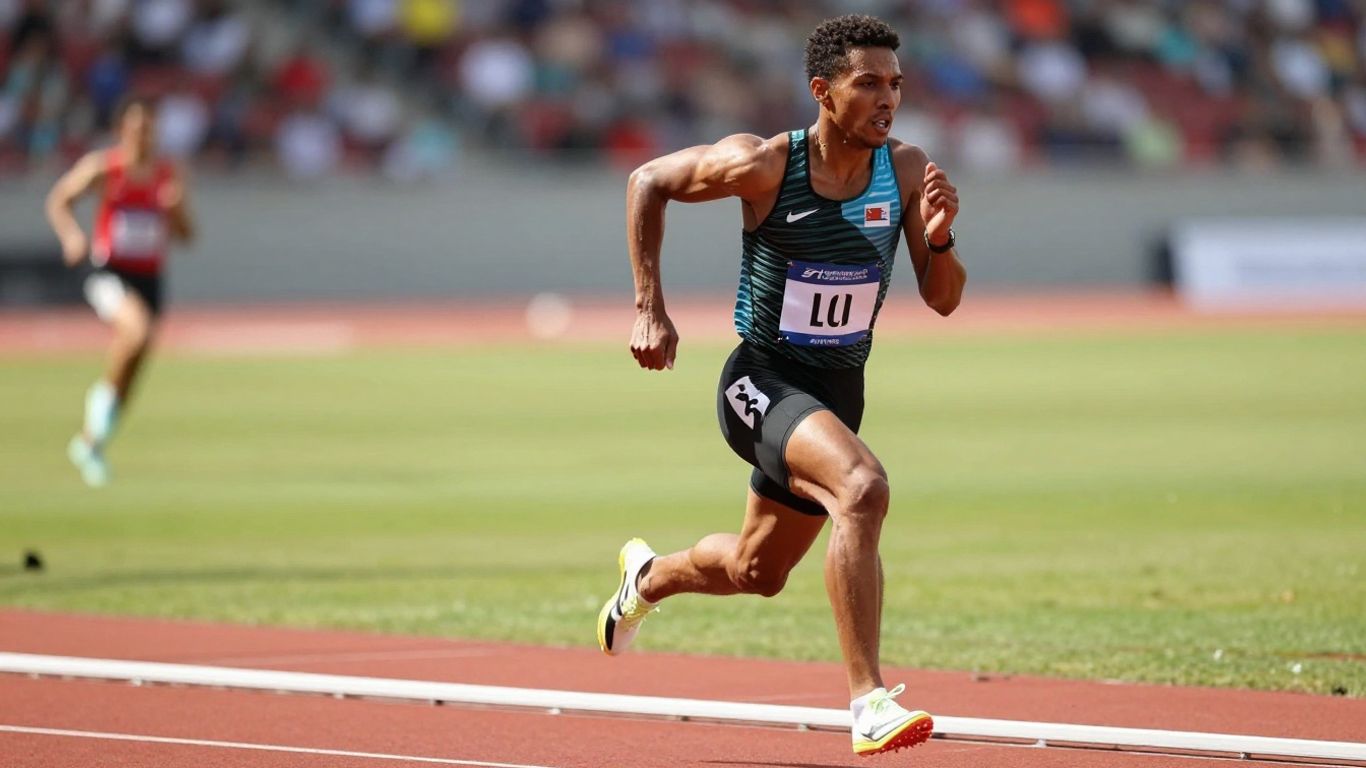
So, you’ve got your 600m split calculator, and you’re ready to get serious about your training. That’s awesome! This tool isn’t just for figuring out race day pace; it’s a fantastic way to structure your workouts and make sure you’re getting the most bang for your buck. Think of it as your personal coach, but, you know, digital.
Designing Interval Workouts
Interval training is where the magic happens for speed and endurance. Your calculator can help you dial in the exact paces for those short, fast bursts and the recovery periods in between. Instead of just guessing, you can set specific targets. For example, if your goal 600m pace is 2:00 (that’s 33.3 seconds per 100m), you might use your calculator to set interval paces that are 5-10 seconds faster per 100m. This helps build speed endurance.
Here’s a sample structure you could aim for:
- Warm-up: 1 mile easy jog, followed by dynamic stretches.
- Main Set: 6-8 repetitions of 200m at a pace 5 seconds faster per 100m than your goal 600m pace, with a 200m jog recovery between each.
- Cool-down: 1 mile easy jog.
Remember, you can adjust the number of reps and the recovery time based on your current fitness. A newer app is available that supports non-integer lap distances for workouts, such as 600m repeats, which is especially useful for running on windy days [3a56].
Pacing Long Runs Effectively
Wait, pacing long runs with a 600m calculator? Yep! While the calculator is built for shorter distances, you can use its principles to structure tempo runs or even parts of your long runs. A tempo run is essentially running at a comfortably hard pace for an extended period. You can use your calculator to determine what a pace 15-20 seconds slower than your 600m goal pace looks like per mile or kilometer. This pace is often sustainable for 20-40 minutes and is great for building aerobic capacity.
Consider this for a tempo segment within a longer run:
- Warm-up: 1-2 miles easy running.
- Tempo Segment: 3 miles at a pace determined by your calculator, aiming for 15-20 seconds slower per 100m than your 600m goal pace.
- Cool-down: 1 mile easy running.
The key is to find a pace that feels challenging but sustainable. It shouldn’t feel like a sprint, but you shouldn’t be able to hold a full conversation either. This ‘sweet spot’ is where your aerobic engine gets a serious workout.
Simulating Race Conditions
This is where things get really interesting. Your calculator can help you create workouts that mimic the demands of your 600m race. Think about breaking down the 600m into smaller segments. For instance, you could do repeats of 300m at your target 600m pace, with very short recovery periods. This trains your body to handle the fatigue that sets in during the race.
Here’s a workout to practice race-day feel:
- Warm-up: Standard warm-up routine.
- Main Set: 3 x 300m at your goal 600m pace, with only 90 seconds of rest between each 300m. This is tough!
- Cool-down: Easy running.
The goal here is to get comfortable with holding your target pace when you’re already a bit tired. It’s about building that mental toughness and physical resilience. Don’t be afraid to adjust the number of reps or the recovery time as you get fitter. You might even find yourself using your calculator to figure out what a pace 5 seconds faster per 100m than your goal pace looks like for shorter bursts within a workout.
Troubleshooting Common 600m Calculator Issues

So, you’ve been plugging numbers into your 600m split calculator, and maybe the results aren’t quite adding up. It happens. Don’t toss the calculator out the window just yet. Let’s look at some common hiccups and how to fix them.
Addressing Inaccurate Pace Predictions
Sometimes, the pace the calculator spits out just feels… off. Maybe it’s way too fast for what you think you can handle, or perhaps it seems too slow for your current fitness level. This usually comes down to the inputs you’re giving it. If you’re using a recent race time for a different distance, the calculator might be overestimating your 600m speed. It’s like trying to guess how fast you can run a mile based on your 100m sprint time – not always a direct correlation.
Here are a few things to check:
- Input Accuracy: Double-check that you entered your distance and time correctly. A simple typo can throw everything off.
- Race vs. Training Pace: Are you using a race time or a training pace? Race times are usually faster. If you’re aiming for a training pace, make sure your input reflects that.
- Calculator Assumptions: Understand that most calculators work on general formulas. They don’t know about your specific training load, how you slept last night, or if you’re feeling a bit under the weather.
Adjusting for Environmental Factors
This is a big one, especially for outdoor running. The calculator doesn’t know if it’s a sweltering summer day or a biting winter morning. These conditions can significantly impact your performance. A calculator might give you a target pace for a perfect 70-degree day, but if you’re running in 90-degree heat with high humidity, that pace is going to feel a lot harder, or might even be impossible.
Think about these factors:
- Temperature and Humidity: Higher temps and humidity slow most people down. You might need to mentally adjust your target pace downwards.
- Altitude: If you live at sea level and are training or racing at altitude, your pace will be slower. The calculator likely doesn’t account for this unless it has a specific altitude setting.
- Wind: A strong headwind can feel like running through treacle, while a tailwind can give you a nice boost. Try to factor this in, even if it’s just a gut feeling.
While calculators are great tools, they are just that – tools. They provide a mathematical estimate based on the data you provide. Your body’s response to training, recovery, and environmental conditions is complex and can’t always be perfectly quantified. Use the calculator as a guide, not a rigid rulebook.
When to Trust Your Gut Over the Calculator
This is where experience and self-awareness come into play. If the calculator is suggesting a pace that feels completely unrealistic based on your training and how your body feels on a given day, it’s probably best to listen to your body. Maybe you had a really tough workout yesterday, or you’re just not feeling 100%. In these cases, pushing for a calculator-dictated pace might lead to injury or burnout.
Consider these points:
- Listen to Your Body: How do you feel today? Are you energized or fatigued? This is often the best indicator of what pace is appropriate.
- Training History: What have you been able to sustain in similar workouts recently? Your recent training is a strong predictor of current capability.
- Race Day Nerves: Sometimes, the adrenaline of race day can make you feel faster than you are. Conversely, nerves can also make you feel sluggish. Be prepared to adjust on the fly.
Ultimately, the calculator is there to help you plan and understand potential paces. But your own experience and how you feel on the day are invaluable guides.
Beyond the 600m Split Calculator
So, you’ve got your 600m split calculator dialed in. You know your target pace, you’ve run through the numbers, and you feel pretty good about what the calculator is telling you. That’s awesome! But here’s the thing: a calculator is just a tool. It can give you data, but it can’t run the race for you. There’s a whole lot more that goes into performing your best on race day, and frankly, sometimes you just have to trust your own body and mind.
Mental Strategies for Race Day
Race day jitters are real, and they can mess with even the best-laid plans. It’s not just about physical preparation; your head game matters big time. Think about how you want to feel when you’re standing at the start line. Do you want to be anxious and worried, or calm and focused?
Practicing some simple visualization techniques can really help. Imagine yourself running strong, hitting your splits, and crossing the finish line feeling good. It sounds a bit cheesy, maybe, but it works. Also, having a mantra, a short phrase you repeat to yourself, can be a lifesaver when things get tough. Something like “Strong and steady” or “Push through” can keep you grounded.
- Visualize Success: See yourself running well.
- Develop a Mantra: A short phrase for tough moments.
- Focus on the Present: Don’t get ahead of yourself.
The Importance of Tapering
This is one area where people often slip up. You’ve been training hard, hitting those tough workouts, and you’re feeling fit. The temptation is to keep pushing right up until race day, thinking more is better. But that’s usually a mistake. Tapering is about letting your body recover and store energy so you can perform at your peak. It means reducing your training volume and intensity in the days or weeks leading up to your race. It’s not about getting lazy; it’s about being smart. Think of it like charging a battery – you wouldn’t keep draining it right before you need it to power something important, right? A good taper allows your muscles to repair and your energy stores to refill. You might feel a little antsy, but trust the process.
Hydration and Nutrition for Peak Performance
What you put into your body is just as important as the miles you put in. For a 600m race, you’re not looking at ultra-marathon levels of fueling, but proper hydration and smart nutrition still play a role. Staying hydrated throughout the week, not just on race day, is key. And what you eat in the days before can make a difference. Focus on balanced meals with good sources of carbohydrates for energy and protein for muscle repair. Avoid trying anything new on race day – stick to what you know your stomach can handle. A little bit of easily digestible fuel a couple of hours before the race can top off your energy stores. Remember, even for shorter races, being properly fueled and hydrated helps your body function optimally.
Don’t let the calculator be the only voice in your head on race day. Your training, your mental state, and your physical readiness all come together. Listen to your body, trust your preparation, and run your race.
Wrapping It Up
We’ve gone over how to use calculators to figure out your pace for that 600m split, and honestly, it’s not as complicated as it sounds. Think of it as just another tool in your running toolbox. Whether you’re aiming for a specific time or just want to get a better feel for your speed, these tools can really help. Don’t get too hung up on the numbers, though. Remember to listen to your body, mix up your training with some of those speed workouts we talked about, and most importantly, enjoy the process.
Frequently Asked Questions
What is a 600m split calculator and how does it help me?
A 600m split calculator is like a special tool that helps runners figure out how fast they need to run each part of a 600-meter race. It helps you plan your speed so you can run your best. Think of it as a guide to help you stay on track during your race.
How do I use a 600m split calculator?
You usually tell the calculator your total goal time for the 600 meters. Then, it breaks that down into smaller chunks, like how fast you should run each 100 or 200 meters. Some calculators might also ask for your current fitness level or past race times to give you a more accurate plan.
Can I use a calculator for training, not just races?
Absolutely! Using a calculator for training helps you set up speed drills. You can tell it your goal pace for the 600m, and it can help you create workouts where you run faster than that pace for short bursts. This makes your muscles stronger and faster for race day.
What if the calculator’s speed seems too hard or too easy?
That’s okay! Calculators give you a starting point. If a speed feels too tough, you might need to adjust your goal time or your training. If it feels too easy, you might be able to push yourself a bit harder. Always listen to your body and adjust as needed.
Do things like weather affect my race pace?
Yes, they can! Hot weather can make you slower, and strong winds can also change how fast you run. Some advanced calculators might let you adjust for these things, but often, you’ll need to use your best judgment on race day based on the conditions.
When should I trust the calculator, and when should I trust my own feeling?
The calculator is a great guide, especially when you’re starting out or trying to be precise. But your body knows best! If you feel unusually tired or strong on race day, adjust your pace a little. The calculator gives you a target, but your own feeling helps you perform your best in the moment.


